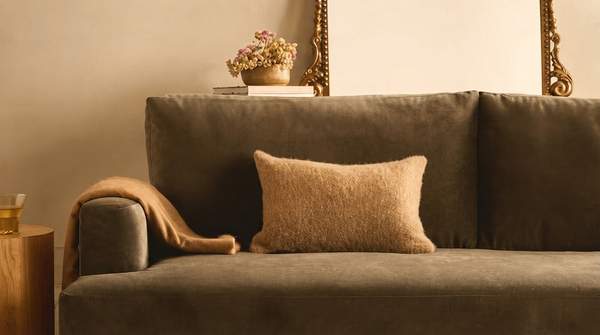
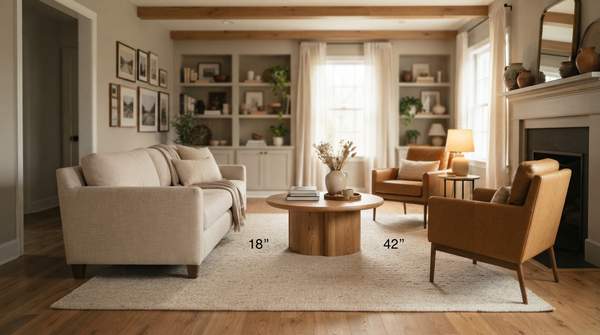
While often seen in grand, luxurious settings, a single curved sofa can make a compact apartment living room feel less rigid and more naturally flowing than any sharp-cornered alternative. This organic shape invites the eye to move freely, softening the confines of limited square footage and creating an immediate sense of ease. Curved furniture, once exclusive to high-end, spacious interiors, is now the preferred solution for making small homes feel larger and more inviting. As urban living spaces continue to shrink, the demand for expertly crafted curved furniture that prioritizes both aesthetics and spatial perception appears likely to grow significantly, offering a powerful tool for maximizing comfort and style.
11 Best Furniture for Small Living Spaces in 2026: Softening Edges
Thoughtful furniture choices dramatically reshape compact environments. A curved sofa, for instance, makes a small space feel less rigid and more natural than any sharp-cornered alternative, according to The Times of India. This organic flow actively counteracts confined feelings, making rooms appear more open and less imposing.
Sofa beds
Best for: Multi-functional living
Sofa beds offer seating by day and sleeping arrangements by night, reducing the need for separate furniture and freeing valuable floor space, according to Furniture City and Walmart. This dual purpose makes them highly adaptable for compact homes. While versatile, consider their weight and potential comfort variations between models.
Price: Moderate to high.
Storage ottomans
Best for: Clutter reduction and flexible seating
Ottomans are smart storage solutions, eliminating clutter while serving as extra seating, a footrest, or a surface, as noted by Furniture City and Walmart. They discreetly tuck away blankets or magazines. Though their storage capacity is limited, their dual function keeps areas tidy.
Price: Low to moderate.
Extendable/Drop-leaf tables
Best for: Adaptable dining and work surfaces
These tables offer space-saving dining, easily expanding for guests or folding down when not in use, according to Furniture City and Walmart. Their flexible design supports various daily needs, conserving valuable floor space. While highly versatile, they do require manual adjustment and may show visible seams. For more, see our Top Best Space Saving Furniture.
Price: Moderate.
Sectionals with storage
Best for: Maximizing seating and hidden storage
These multi-functional sectionals offer ample seating and integrated storage, optimizing comfort without sacrificing valuable space, as highlighted by Furniture City. While they provide high seating capacity and discreet storage, their size can dominate a small room, limiting arrangement flexibility.
Price: High.
Beds with under-frame drawers
Best for: Bedroom clutter elimination
Beds with built-in drawers utilize often-wasted space beneath the mattress, eliminating clutter, according to Furniture City. They offer discreet storage for linens or seasonal clothing, keeping the floor clear. Be aware that drawers can be shallow and may limit under-bed cleaning access.
Price: Moderate to high.
Coffee tables with lift tops
Best for: Flexible living area functionality
These tables offer dual functionality, providing both a surface and hidden storage, as noted by Furniture City. The lift-top feature allows for comfortable dining or working from a sofa. While multi-purpose, their mechanisms can wear, and the appearance may lean utilitarian.
Price: Low to moderate.
Wall-mounted desks
Best for: Creating a dedicated workspace
Wall-mounted desks create a workspace without consuming valuable floor space, adapting to daily needs, according to Furniture City. They fold away neatly when not in use, offering a versatile surface. Keep in mind their fixed height and the need for installation.
Price: Low to moderate.
Nesting tables
Best for: Flexible surface area
Nesting tables offer flexible surface area that expands or stores compactly, providing adaptability for various uses, as noted by Furniture City. They serve as side tables or extra surfaces as needed and are easy to store. While versatile, their individual surfaces are smaller and can be unstable if not well-made.
Price: Low to moderate.
Platform beds
Best for: Streamlined bedroom design
Platform beds are compact bedroom essentials, fitting well into smaller rooms with their streamlined design, according to Furniture City. They eliminate the need for a box spring, reducing overall bulk and offering a space-efficient solution. They are typically lower to the ground, often with less under-bed clearance.
Price: Moderate.
Compact sofas
Best for: Essential seating in tight areas
Compact sofas directly address the need for seating in small apartments, offering multi-functional benefits with a smaller footprint, as stated by Furniture City. They provide comfort without overwhelming the room, though seating capacity and lounging room are limited.
Price: Moderate.
Rounded armchairs
Best for: Adding softness and flow
Rounded armchairs contribute to a softer, more inviting feel in small spaces, making compact areas feel less rigid and blending naturally, according to The Times of India. Their gentle curves encourage a relaxed atmosphere and enhance visual flow. While they add warmth, they typically offer less hidden storage and can feel bulky if poorly scaled.
Price: Moderate to high.