The most durable upholstery fabrics for a living room sofa are performance synthetics, performance velvet, microfiber and leather — but the right one for you depends on which trade-off you can live with. A fabric that shrugs off juice spills may not deliver the plush feel you want, and the softest option may demand weekly vacuuming. Here is how to weigh durability, stain handling, feel and maintenance against your actual household.
Understanding Upholstery Durability: Key Metrics
Before comparing fabrics, you need one number: the double rub count. This is the industry's standard abrasion test, and it is how upholstery durability gets screened before a sofa ever reaches a showroom. As Tyner Furniture's buyer guide puts it, "In upholstery, that guesswork doesn't always hold up" — you cannot judge durability by touch alone.
The thresholds are straightforward. Fabric supplier Liz Jordan-Hill publishes this scale: under 9,000 double rubs is light duty for decorative or occasional use; 9,000 to 15,000 suits low-traffic furniture; 15,000 to 30,000 is residential standard for everyday home furniture; 30,000 to 70,000 is heavy residential, appropriate for high-traffic family homes; and 70,000 and above is commercial grade, the tier used for hotels and restaurants. Tyner Furniture's guidance similarly points shoppers toward 15,000+ double rubs for heavily used pieces like family-room sofas.
Keep two caveats in mind. Ratings vary within a fabric family — a performance velvet and a standard cotton velvet are entirely different animals — and abrasion resistance is only one dimension. Stain handling, pet-claw resilience and cleaning effort matter just as much in daily life.
Upholstery Fabric Decision Matrix
The matrix below maps each fabric's documented performance to the household scenarios where it fits best. Use it to narrow your shortlist to one or two candidates before you order swatches.
| Fabric | Best For | Abrasion Resistance (Double Rubs) | Stain & Moisture Handling | Feel & Appearance | Maintenance Level |
|---|---|---|---|---|---|
| Crypton (performance fabric) | Heavy-use family rooms; homes with messy kids and pets | 50,000, per Living Designs Furniture — above the 30,000 industry standard it cites | Liquid-repellent, stain- and odor-resistant; treatment is permanently sealed into fibers | Varies by base fabric; engineered for function first | Low; easy spot-cleaning |
| Other performance fabrics (e.g., Sunbrella, Revolution) | Pet-friendly, everyday households | Commercially rated for abrasion, per Room & Board's performance category | Resist stains, scratches, water damage and odors, per The Fabric Mill | Synthetic look and feel; wide color range | Low; easy to clean |
| Microfiber / performance microsuede | Budget-friendly family furniture; high-traffic, pet households | 70,000+ for performance microsuede, per Liz Jordan-Hill; standard microfiber varies | Dense weave resists spills and staining; easy to spot-clean | Soft, suede-like, casual | Low; mild soap and water |
| Leather (top-grain or protected) | Durable, easy-clean seating; homes with pets, with a scratch caveat | Not rated via double rubs; durable in daily use | Resists spills and stains; wipes clean | Heirloom character; develops a patina over time | Low for spills; regular conditioning recommended |
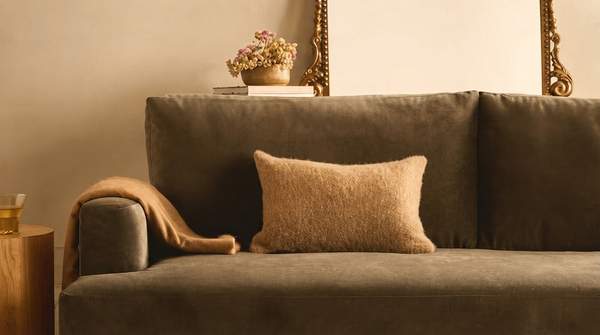
| Performance velvet | Style-forward homes that still need durability | 70,000+ for performance grades, per Liz Jordan-Hill; standard cotton velvet under 15,000 | Can be treated with stain repellents; smooth surface releases fur easily | Soft, luxurious, scratch-resistant | Moderate; attracts fur, needs frequent vacuuming or lint rolling |
Fabric Spotlight: Crypton and Other Performance Fabrics
Crypton is the best-documented example of an engineered performance fabric. Living Designs Furniture describes it as a patented treatment applied through an immersion bath and high-temperature heat process that seals stain, moisture and odor resistance permanently into every fiber — it "does not wear off, wash out, or fade over time." The same source rates it at 50,000 double rubs, well above the 30,000 industry standard it cites, and notes its use in hospitals and hotels.
Crypton is a branded example, not the only option. The Fabric Mill groups Sunbrella and Revolution into the same performance-fabric category, describing them as made to resist stains, scratches and water damage while remaining easy to clean. Room & Board's own fabric guide sorts its performance category as commercially rated fabrics that resist stains, fading and abrasion. If your priority is a sofa that survives daily chaos with minimal effort, this family is the strongest technical choice.
Fabric Spotlight: Microfiber and Leather
Microfiber earned its family-room reputation honestly. Living Designs Furniture explains that its tightly woven synthetic fibers create a dense surface resistant to spills and staining, and it is soft, affordable and easy to spot-clean — best suited, in that source's framing, to budget-friendly family furniture with moderate use. Performance microsuede pushes the durability ceiling higher: Liz Jordan-Hill rates it at 70,000+ double rubs with very low pilling risk, suitable for high-traffic homes and pets.
Leather plays a different role. It resists spills and stains and wipes clean easily, and it develops a patina over time that many owners find enhances its appearance. The Fabric Mill recommends high-quality top-grain or protected leather for better durability and regular conditioning to keep it soft. The honest caveat: pet claws can scratch it, so a throw blanket for your pet's favorite spot is a sensible precaution. Tyner Furniture also cautions that leather, while an heirloom choice, is not always the most forgiving technical spec for every room condition.
Fabric Spotlight: Velvet
Velvet is the category where perception and data diverge most sharply. Standard cotton velvet is genuinely fragile — Liz Jordan-Hill rates it under 15,000 double rubs, suitable only for decorative, low-traffic pieces. But performance velvet is a different fabric: the same supplier rates it at 70,000+ double rubs with low pilling risk in polyester blends, and Premier Table Linens reports its heavy-duty velvet being specified for hotel banquettes, airport lounges and healthcare waiting rooms — applications no one would traditionally associate with velvet.
The trade-off is maintenance. The Fabric Mill notes that velvet attracts pet hair, though its smooth surface lets fur come off easily with a vacuum or lint roller, and it recommends choosing a high-quality velvet with a tight weave and keeping a lint roller handy in high-traffic areas. If you want luxury and durability together, performance velvet delivers both — at the cost of more frequent vacuuming.
Choosing the Right Fabric for Your Lifestyle
For a busy family room with kids and pets, the evidence points to performance fabrics, performance microsuede or leather. Performance fabrics resist stains, scratches and odors and clean up easily; microsuede offers 70,000+ double rubs and very low pilling; leather wipes clean but needs protection from claws. Crypton's 50,000-double-rub rating and permanent stain resistance make it the illustration of what "life-proof" looks like.
For a style-forward home where aesthetics lead, performance velvet is the surprise winner: you get the soft, luxurious look with commercial-grade abrasion numbers, provided you accept regular vacuuming. For a formal, less-used sitting room, the durability bar drops — fabrics in the 9,000-to-15,000 range, or decorative weaves like standard cotton velvet, are adequate because the furniture simply is not stressed daily.
Making Your Final Upholstery Choice
Select an upholstery fabric that balances durability, ease of maintenance and aesthetic appeal by prioritizing the most critical needs of your household and living space. Practically: if spills and pets dominate, choose a performance fabric or microsuede; if you want wipe-clean simplicity and character, choose protected leather; if luxury feel is non-negotiable, choose performance velvet and commit to the vacuuming.
Before you commit, ask for the fabric's double rub count and confirm it matches your scenario — 15,000+ for a heavily used family sofa, 30,000+ if you want heavy-duty headroom. The measurable indicator of a good choice is simple: the chosen fabric's performance in daily use, including its resistance to stains and wear and its ease of cleaning, aligns with the expected demands of your household scenario. If it does after the first season of real life, you picked well.
Sources
- Best Fabric for Sofa Upholstery: A 2026 Homeowner's Guide — Tyner Furniture
- Is Chenille Fabric Durable? Everything You Need to Know — Liz Jordan-Hill Fabrics
- The Most Durable Upholstery Fabrics Ranked — Livingdesignsfurniture
- Fabric Guide - Design Help — Room & Board
- Pet-Friendly Upholstery: Best Fabrics for Dog Owners — Fabricmill
- Rub test on upholstery velvet fabric — Premier Table Linens