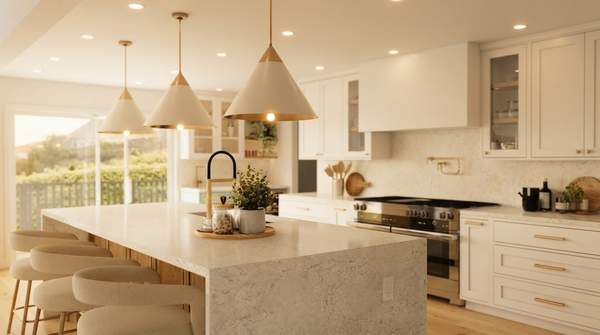
In 2021, a designer updating an installation took to Twitter, specifically asking for objects to add that evoked the 1990s. A deliberate search for era-specific items showed a growing, active interest in the aesthetics of that decade, according to House & Garden, moving beyond mere passive observation.
Yet, once-maligned 90s home decor trends, like the ubiquitous honey oak, are making a comeback. Their modern interpretations, however, are a stark departure from their original widespread application, creating a fascinating tension between nostalgia and refined design.
As homeowners increasingly prioritize personal connection and warmth, more nostalgic elements from recent past decades are likely to be selectively re-introduced. This demands a nuanced approach from designers and consumers alike, proving that restraint and modern application can elevate even the 'ugliest' nostalgia.
Not Your Mother's Honey Oak: The Modern Makeover
The modern resurgence of honey oak embraces cleaner silhouettes and more subtle applications, a significant shift from its earlier widespread use. Gone is the "wood drenching" of 90s homes. Today, designers opt for honey oak in specific elements like cabinetry, millwork, or select furniture pieces, according to House Beautiful. This refined approach avoids the overwhelming, wall-to-wall application that once defined the material. Designers are effectively performing aesthetic surgery on a maligned material, proving even 'ugly' trends can be redeemed with restraint. This selective integration allows the material's inherent warmth to shine without dominating, offering a sophisticated nod to the past rather than a full replication.
A Measured Return: The Numbers Behind the Trend
Interior designers observe a resurgence of honey oak, not to its 90s peak, but with increased interest compared to a decade prior, according to House Beautiful. A measurable increase shows a notable shift in design perception for a once-outdated material. Its cautious yet growing adoption reveals a deliberate re-evaluation of honey oak's potential in contemporary homes.
The Pull of Warmth and Nostalgia
Honey oak's resurgence stems from two key factors: a rise in warm interior tones and nostalgic associations for homeowners who grew up in the '80s and '90s, as reported by House Beautiful. This movement towards inviting, warmer palettes creates a 'permission structure' for materials like honey oak to be reinterpreted as sophisticated. Driven by a desire for comfort and personal history, this trend reveals a generation now reaching peak purchasing power actively shaping home aesthetics. They reclaim and refine elements of their youth, rather than rejecting them, exerting substantial influence on future design cycles.
From Cabinets to Curios: Integrating 90s Elements Today
Contemporary designers integrate honey oak into diverse styles, showcasing its versatility when used thoughtfully. It might appear as a single statement piece, like a mid-century inspired credenza, or in new kitchen cabinetry paired with sleek, modern hardware and cool-toned countertops. This contrasts sharply with the original 90s aesthetic of matching honey oak trim, doors, and flooring throughout a home. This careful curation offers warmth and texture without overwhelming the space. Instead of 'wood drenching,' designers incorporate a honey oak dining table or accent chairs, allowing these pieces to complement a room's overall design. The key lies in creating balance and intentionality, proving once-maligned materials can find new life with thoughtful application.
The Future of Retro: A Nuanced Approach to Design Cycles
The conscious redemption of 'ugly' nostalgia marks a new era in design, where generations actively refine the aesthetics of their youth. Modern honey oak use is subtle, avoiding 'wood drenching,' according to House Beautiful. This resurgence, driven by 'nostalgic associations for homeowners who grew up in the '80s and '90s' (House Beautiful), reveals a deeper trend. Design cycles are now less about wholesale rejection and more about thoughtful reinterpretation and personal resonance, blurring lines between 'in' and 'out.' The generation embracing honey oak consciously corrects its original excesses, choosing 'cleaner silhouettes and more subtle applications.' This signals a shift where personal connection and careful curation will increasingly dictate home aesthetics, moving beyond fleeting trends towards more enduring, personalized spaces.
As younger generations continue to influence purchasing decisions, prioritizing personal history over strict trend adherence, further nuanced revivals of past aesthetics are likely to emerge by late 2026.