If you want a greener floor, the honest answer is that no single material wins on every count. Bamboo and cork offer rapid renewability and long service lives, luxury vinyl trades a synthetic composition for durability and recycled content, and recycled-content carpet's biggest environmental advantage comes at the end of its life, through organized recycling and repair. The right choice depends on which of those priorities—renewable sourcing, lifespan, comfort, or waste diversion—matters most in your rooms.
This guide compares the four materials on consistent criteria: where they come from, how they perform, how long they last, and what happens when they wear out. It skips pricing, which varies too widely by region and installer to compare reliably, and it doesn't attempt to quantify certifications like LEED points for each material.
Understanding Eco-Friendly Flooring: Key Considerations
Before comparing materials, it helps to know what "eco-friendly" actually measures in flooring. Three factors do most of the work: the sustainability of the source material, the product's durability and effect on indoor air quality, and its end-of-life options. A floor that lasts decades offsets its manufacturing footprint simply by avoiding replacement, while a floor that can be recycled or repaired keeps waste out of the landfill twice—once by using recycled inputs, once at disposal.
Indoor air quality matters too. A homeowner-oriented guide from Crowl Interiors notes that many manufacturers now use low-VOC (volatile organic compound) technology in luxury vinyl, reducing environmental impact and improving the air inside your home. The same logic applies across materials: the greenest floor is one that is responsibly sourced, lasts as long as possible, and has a realistic path out of your home that doesn't end at the dump.
Bamboo Flooring: Rapidly Renewable and Durable
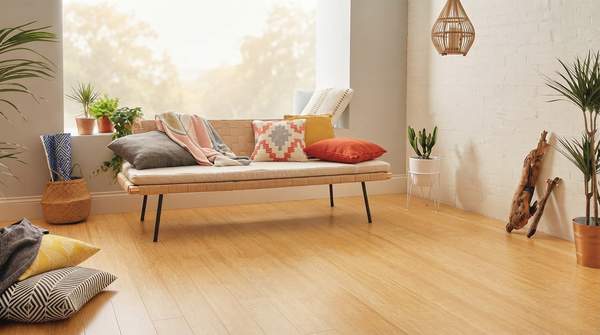
Bamboo's environmental pitch starts with what it is: a grass, not a tree, and one that regrows quickly after harvest. That rapid regeneration is what makes it a renewable resource rather than a deforestation product, and it's why bamboo is frequently grouped with cork among the most sustainable flooring solutions available today.
On performance, bamboo holds up well. A comparison by Helena Kostina at Portuguese Treasures rates bamboo's durability as high—harder and more resistant than cork, especially in strand-woven varieties—though durability varies by type. The trade-off is comfort: bamboo offers less cushioning underfoot than cork, and its sound insulation is moderate rather than excellent. Kostina also cautions that although bamboo resists moisture, it is generally avoided in high-humidity spaces like bathrooms and basements unless specially treated, and it is vulnerable to mould. Maintenance is relatively low, with occasional refinishing rather than the periodic sealing cork demands. With proper care, bamboo floors often last decades, and untreated bamboo is generally considered biodegradable—though specific recycling programs for bamboo flooring are not mentioned in the sources consulted.