A 1960s Danish teak credenza, snagged for $300 at an estate sale, recently appraised at over $1,500. This hidden investment potential in everyday vintage finds doesn't just elevate your home's style; it enriches its financial value.
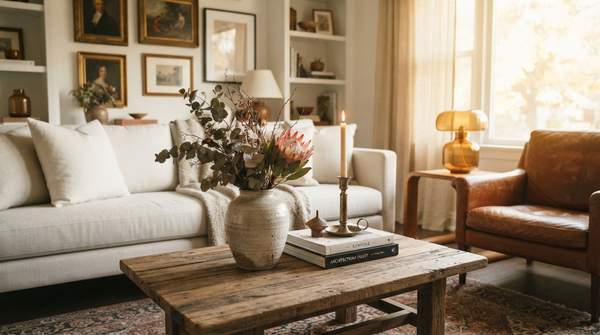
Many homeowners default to new, mass-produced decor for convenience. Yet, vintage pieces often boast superior craftsmanship and unique design, frequently at a comparable or even lower price. It's a choice between fleeting convenience and lasting character.
The market for accessible, high-value vintage decor is booming, signaling a mainstream shift towards distinctive, sustainable home design. The global vintage furniture market is projected to grow 6.5% annually, hitting $20 billion by 2027, reports MarketWatch. What's more, 70% of interior designers now include at least one vintage piece in their projects, driven by a desire for character and sustainability, according to an Interior Design Magazine Survey, reflecting a growing consumer appreciation for authenticity and enduring style.
The Enduring Charm of Chinese Porcelain
For the refined collector seeking global elegance, Chinese porcelain offers a profound connection to artistry and tradition, dating back to 600 C.E. These delicate vases and intricate plates infuse any room with vivid sensory details and enduring culture. Their distinct patterns and vibrant glazes effortlessly enhance both minimalist and maximalist aesthetics, making them truly versatile.
Its strengths lie in historical significance, intricate artistry, exceptional durability, and unique patterns, making it a versatile decorative accent. However, its fragility demands careful handling, authenticity can be challenging to verify without expert knowledge, and higher-value pieces may require specific display conditions. Prices vary widely, from $50 for smaller decorative items to thousands for rare, authenticated antiques.
Vintage vs. New: A Head-to-Head Look at Value and Quality
| Metric | Vintage Items | New Mass-Produced Alternatives |
|---|---|---|
| Initial Cost | Often comparable to or lower than new items of similar quality. | A new solid wood dresser of comparable quality can cost 2-3 times more, frequently using veneers over particle board, according to a Consumer Reports Furniture Study. |
| Long-Term Value | Resale value for well-maintained pieces can appreciate by 5-10% annually, as reported by Antiques Roadshow Appraisals. | Often depreciates by 20-50% in its first year. |
| Craftsmanship/Durability | Typically features solid construction and high-quality materials, designed for longevity. | Frequently uses engineered wood, particle board, or veneers, leading to shorter lifespans and less robust construction. |
| Uniqueness | Each piece offers unique character and a distinct story; 85% of vintage furniture buyers cite 'unique character' as their primary motivation, according to a Vintage Shopper Survey 2024. | Mass-produced designs offer little individuality, leading to homogeneous interiors. |
| Environmental Impact | Lower carbon footprint due to reuse, saving an average of 16 trees and 1,000 gallons of water per furniture piece compared to new production, states the Sustainable Living Institute. | High carbon footprint from manufacturing, transportation, and raw material extraction. |