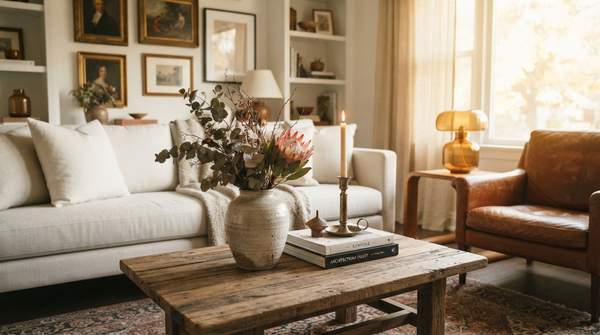
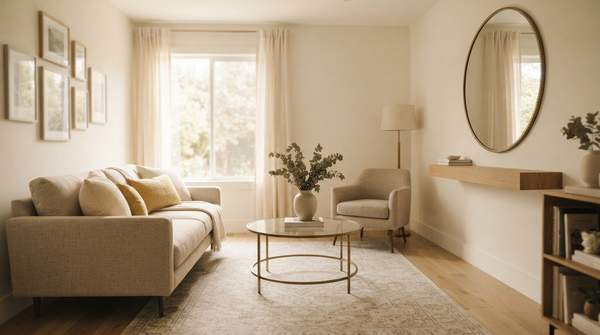
It's not the number of artworks, but the strategic placement of just one significant piece—above a fireplace or a carefully chosen sofa—that instantly transforms a room from chaotic to curated. This deliberate approach creates an immediate focal point, grounding the entire space with purpose.
However, homeowners often acquire art based purely on personal passion, overlooking the critical interplay between these cherished pieces and existing decor. Without a strategic approach, these treasures can inadvertently detract from a home's overall aesthetic, leaving spaces disjointed or overwhelmed.
Homeowners who adopt a curator's mindset, focusing on intentional placement and visual dialogue, are likely to achieve a more sophisticated, personalized living environment that truly reflects their style.
Beyond Just Collecting: The Principles of Intentional Display
Establishing visual order is crucial for any room. Visual hierarchy, created through clear focal points, prevents spaces from feeling chaotic, according to Oblist. A single, thoughtfully placed large artwork can achieve more impactful curation than a cluttered collection, instantly transforming a room. The relationship between elements—like a large floor sculpture and smaller tabletop objects—creates dynamic tension through scale and proportion, keeping spaces visually engaging. Oblist also emphasizes material harmony, where textures, finishes, and surfaces create a subtle dialogue. Homeowners often believe more art equals more aesthetic, but Julianinc's insights on visual anchoring, combined with Oblist's hierarchy principles, confirm that one impactful piece outweighs a crowded display.
Practical Steps to Curate Your Collection with Impact
Creating a strong visual foundation begins with strategically placing a large, striking piece—a painting above a fireplace or a sculpture near a sofa—to create a clear visual anchor, says Julianinc. This placement defines the space and draws the eye.
When blending inherited art with modern decor, use these pieces as a starting point. Select complementary colors, patterns, and textures for a cohesive look. A vintage landscape, for instance, finds harmony with contemporary furniture if its dominant colors echo in throw pillows or a rug. The belief that art must 'match' a room is a misconception; Julianinc's approach, paired with Oblist's material harmony, shows diverse pieces coexist beautifully when textures, colors, and forms are intentionally orchestrated. This creates a cohesive dialogue, rather than a forced match.
Avoiding Common Curation Mistakes
A common error is acquiring art based purely on personal passion, ignoring its interplay with existing decor. This risks undermining a home's aesthetic, creating disjointed or overwhelming spaces that fail to highlight individual pieces. Instead, consider how a new piece contributes to the room's overall narrative. Oblist's principles of material harmony and scale suggest even disparate pieces can be unified through intentional textural and proportional dialogue. A unified visual experience is far more effective than simply filling wall space.
Your Curation Questions Answered
How can I begin curating my first art piece?
Starting your art collection involves researching artists and galleries that align with your personal aesthetic, rather than focusing solely on potential investment returns, says Artsy. Explore what personally resonates to ensure your first piece truly reflects your taste and style, setting a foundational tone.
The Last Word: Your Home, Curated
If homeowners consistently apply these curation principles, their living spaces will likely evolve into sophisticated, deeply personal sanctuaries, reflecting a true mastery of intentional design.