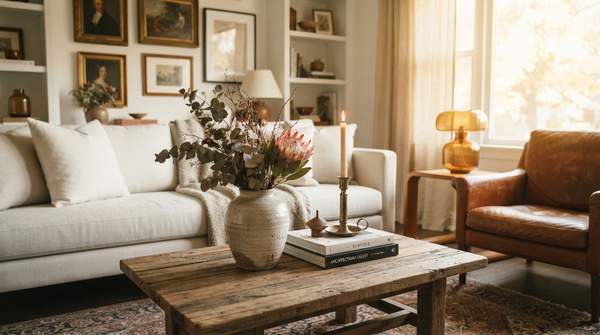
Plate walls, adorned with antique china, floral plates, and hand-painted ceramics, are now replacing stark, bare surfaces in homes across the country, signaling a dramatic shift in interior design. For years, home design emphasized clean lines and sparse, modern spaces, but now people actively seek vintage pieces and antiques to fill their homes with character and stories. This rapid embrace of character-filled decor suggests the era of extreme minimalism is waning, giving way to more personalized and eclectic home environments.
The End of Bare Walls and Bland Storage
The reign of minimalist design, with its empty spaces and purely functional items, is clearly challenged. Consumers are no longer content with 'clean' decor; they crave personal history and unique character. They invest in pieces like vintage steamer trunks and antique plate walls, signaling a deep shift away from impersonal living. This widespread desire for 'character and stories' reveals a rebellion against the homogeneity of mass-produced decor, born from significant fatigue with standardized spaces.
Vintage Takes Center Stage: From Trunks to Murano Glass
In 2026, vintage steamer trunks replace plain storage in living rooms and bedrooms, offering both function and history, according to House Digest. Plate walls, adorned with antique china and hand-painted ceramics, also replace bare, minimalist surfaces. The widespread adoption of antiques as centerpieces signals a market hungry for curated, story-rich home goods, actively penalizing brands pushing undifferentiated mass-produced decor.
Even within existing minimalist frameworks, colorful Murano glass adds a popular, cozy statement, as reported by House Digest. Minimalism isn't abandoned but rather softened and personalized; it's an adaptation of modern aesthetics with vintage warmth, not a total overthrow.
The Search for Authenticity in a Mass-Produced World
The shift reflects a deeper cultural yearning for authenticity and individuality. In a world saturated with identical, mass-produced goods, consumers actively replace utilitarian items with pieces carrying a narrative and personal history. This desire for 'character and stories' is a clear rebellion against homogeneity, signifying profound fatigue with standardized, impersonal living spaces. Homeowners are seeking items that connect their space to a past era, moving beyond mere aesthetics.