You can save $70 to $140 on mulch delivery alone by picking it up yourself. This small act shows how a luxurious backyard oasis is within reach for almost any budget. Many see creating a stunning outdoor space as expensive, but strategic DIY efforts unlock significant savings. Homeowners are now empowered to build high-value outdoor spaces without professional help. This shifts luxury landscaping from high cost to clever ingenuity, making the 'oasis' concept accessible to all. Effective planning, like drawing a design to scale, prevents costly errors before any physical work begins, according to PrettyPurpleDoor and AHS.
Creative DIY Ideas for a Budget-Friendly Oasis
1. Creating a Landscaping Plan
Best for: All homeowners, especially first-time DIY landscapers.
A plan drawn to scale allows visualization of the design before installation, avoiding the expense of physical changes. Apps like Home Outside, Home Design 3D, iScape, and Landscaper’s Companion assist with 3D rendering and plant arrangement. This initial step defines your backyard oasis's scope and aesthetic.
Strengths: Prevents costly mistakes; provides a clear vision; allows for iterative design changes. | Limitations: Requires time investment; software can have a learning curve. | Price: Free to low-cost for basic apps.
2. Phased Project Implementation
Best for: Homeowners with limited upfront budgets or time constraints.
Breaking a landscaping project into phases makes it more affordable over time, according to Prettypurpledoor. This approach allows gradual build-out, distributing expenses and effort over several months or years. It ensures even large projects remain financially accessible.
Strengths: Spreads costs; reduces overwhelm; allows for design adjustments. | Limitations: Project completion takes longer; requires consistent motivation. | Price: Cost-saving over a single, large investment.
3. Prioritizing Hardscaping Before Softscaping
Best for: Homeowners building a new backyard or undertaking significant renovations.
Start landscaping projects with hardscaping, such as walkways and walls, before focusing on softscape (plant-oriented design), states AHS. This sequence establishes your backyard oasis's structural foundation, preventing damage to plantings during construction.
Strengths: Prevents rework; provides a stable base for plantings; ensures long-term structural integrity. | Limitations: Can delay immediate greening of the space; requires careful initial planning. | Price: Initial hardscaping costs can be higher, but prevent future expenses.
4. Using Natural Rocks for Hardscaping
Best for: Eco-conscious homeowners and those seeking a rustic or natural aesthetic.
Using rocks instead of landscaping stones saves money on hardscaping, according to AHS. Natural rocks offer a durable and aesthetically pleasing alternative for paths, borders, and retaining elements. They integrate seamlessly into many natural backyard designs.
Strengths: Cost-effective; durable; natural appearance; readily available in many areas. | Limitations: Heavy to transport and install; selection might be limited locally. | Price: Often free or very low cost, depending on sourcing.
5. Utilizing Mulch (Free/DIY)
Best for: All gardeners looking to improve soil health, conserve water, and reduce weeds.
Mulch is a cost-effective landscaping material, often free from local tree trimmers or city programs (Ryanlawn). DIY pickup saves $70 to $140 on delivery fees. Even purchased mulch costs $30-$135 per cubic yard (bulk) or $3.25-$6.50 per bag (LawnStarter). One cubic yard covers 162 sq ft at 2 inches deep or 108 sq ft at 3 inches deep. These savings prove a high-end look doesn't demand expensive materials.
Strengths: Improves soil; conserves water; suppresses weeds; free material options. | Limitations: Can attract pests if not properly applied; requires annual replenishment. | Price: Free (DIY pickup) to $135 per cubic yard.
6. Selecting Native or Climate-Appropriate Plants
Best for: Environmentally conscious homeowners seeking low-maintenance gardens.
Choosing plants suited to local conditions saves money and avoids frustration, increasing success rates, according to Prettypurpledoor. Neglecting unsuitable plants leads to costly replacements. This strategic selection reduces long-term maintenance and replacement expenses.
Strengths: Low water usage; resistant to local pests and diseases; thrives with minimal care. | Limitations: Aesthetic choices might be narrower; initial sourcing can require research. | Price: Reduces future costs for water, fertilizer, and replacements.
7. Choosing Perennial Plants for Longevity
Best for: Gardeners desiring consistent beauty without annual replanting efforts.
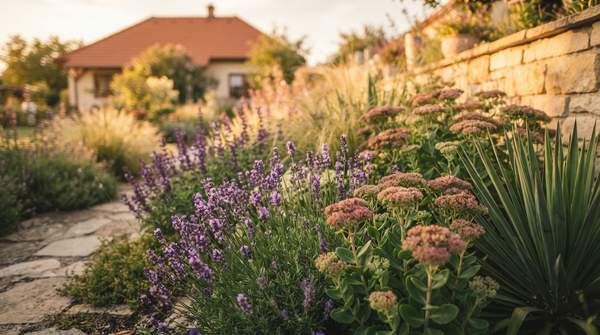
Perennials like ferns, tulips, grasses, and fruit trees are a safe choice for beginners as they return each year, states AHS. These plants establish long-term beauty and structure, eliminating the recurring expense and effort of seasonal planting.
Strengths: Returns annually; reduces replanting costs; low maintenance once established. | Limitations: Slower to establish than annuals; requires initial investment. | Price: Higher initial cost than annuals, but cost-effective over many years.
8. Growing Trees from Cuttings or Free Programs
Best for: Patient homeowners looking to add significant greenery at no cost.
New trees can be grown from cuttings or obtained for free through organizations like the Arbor Day Foundation, notes Ryanlawn. This method allows substantial additions to a backyard oasis without purchase costs, transforming zero cash outlay into significant visual assets.
Strengths: Free or very low cost; sustainable; provides a sense of accomplishment. | Limitations: Requires patience for growth; success rates can vary for cuttings. | Price: Free.
9. Repurposing Items for Planters/Flower Beds
Best for: Creative individuals and those embracing a shabby-chic or upcycled aesthetic.
Flower beds can be created in-ground or by repurposing items like hollow tree stumps, old barrels, and carts into planters, states Ryanlawn. This approach adds unique character and greenery using materials that might otherwise be discarded, embodying ingenious repurposing and DIY effort.
Strengths: Cost-effective; unique aesthetic; environmentally friendly; promotes creativity. | Limitations: Items might require modification; durability varies by material. | Price: Free to very low cost.
10. DIY Water Features
Best for: Homeowners seeking a tranquil focal point with minimal expense.
DIY water features like fountains or bird baths can be constructed using a water pump, tubing, drill, glue, sealant, and pots, according to Ryanlawn. These projects provide immediate visual impact and soothing sounds without professional installation, transforming simple components into high-impact visual assets.
Strengths: Adds serenity; creates a focal point; highly customizable; low material cost. | Limitations: Requires basic DIY skills; ongoing maintenance for water quality. | Price: Low material cost, typically under $100 for components.
Smart Material Choices: Rocks vs. Landscaping Stones
| Feature | Natural Rocks | Landscaping Stones |
|---|---|---|
| Initial Cost | Free to low cost (sourcing dependent) | Moderate to high (material & delivery) |
| Aesthetic | Organic, rustic, blends with nature | Uniform, structured, formal |
| Installation Effort | High (heavy, irregular shapes) | Moderate (uniform, easier to stack) |
| Durability | Extremely high, weather-resistant | High, but can chip or crack over time |
Natural rocks offer a cost-effective and aesthetic hardscaping solution over manufactured stones. Though they demand more effort due to weight and shape, their zero-to-low material cost and durability provide significant long-term savings. This choice directly cuts the upfront expense of structural elements.
If current trends continue, homeowners will likely redefine luxury landscaping by prioritizing ingenuity and DIY efforts over expensive professional services, making high-end outdoor spaces more accessible than ever.
Frequently Asked Questions
What are the cheapest ways to landscape a backyard?
The absolute cheapest ways involve utilizing materials already on hand or freely available. Consider collecting fallen leaves and grass clippings for compost or mulch. You can also look for discarded items like old tires or pallets to repurpose into planters or garden beds, saving on material purchases.
How can I make my backyard look expensive on a budget?
To achieve a high-end look without high costs, focus on clean lines, strategic lighting, and a cohesive color palette for plants and decor. Even inexpensive materials like gravel or free stones can create elegant pathways when edged neatly. Adding solar-powered path lights can dramatically elevate the evening ambiance for minimal investment.
What are some easy DIY landscaping projects for beginners?
Beginners can start with container gardening using repurposed pots, creating small rock gardens, or establishing simple flower borders with perennial plants. Painting an old fence or shed a fresh color can also provide a significant visual upgrade with minimal skill. These projects offer immediate gratification and build confidence for larger endeavors.