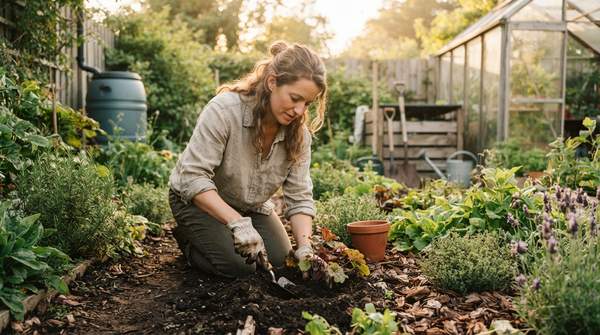
Making a home garden more environmentally friendly comes down to four core principles: nurturing soil health, conserving water, choosing the right plants, and reducing waste. That is the framework promoted by horticultural authorities from the Missouri Botanical Garden to the Royal Horticultural Society, and it turns a scattered set of "green tips" into a systematic plan. Rather than adopting every trend at once, gardeners can assess their current habits against each principle and take concrete, prioritized actions — from composting kitchen scraps to switching from mains water to a water butt.
Core Principle 1: Nurturing Soil Health
Healthy soil is the foundation of a sustainable garden. The University of Maryland Extension, which frames sustainable gardening as a set of solutions to climate change, identifies soil health as one of its central management areas, alongside water and plant choices. The healthiest soil for plants, according to the UBQ Materials editorial team, is "rich, well-draining soil with balanced nutrients, active microorganisms, and plenty of organic matter."
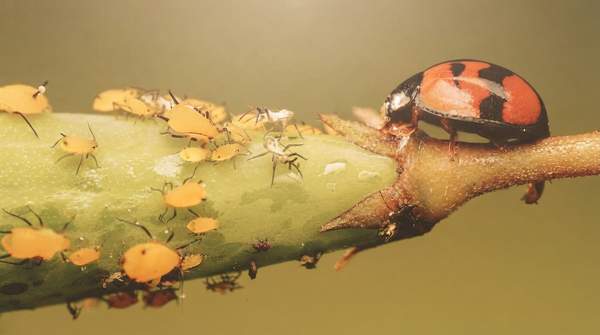
The most direct way to build that soil is composting. Home gardeners can compost yard waste, food waste, and grass clippings to create a nutrient-rich growing medium, which reduces the need for synthetic fertilizers. The Garden Continuum, a Massachusetts-based landscaping company, recommends pairing compost with organic fertilizers and natural pest control methods, and avoiding chemical herbicides and pesticides that can harm the environment and contaminate groundwater.
Mulching is the second soil-building practice. An organic mulch such as wood chips, straw, or leaves helps retain soil moisture, suppress weeds, and regulate soil temperature — and it improves soil health over time while reducing water consumption. One material choice deserves special attention: peat. The RHS notes that peatlands are the world's largest carbon store on land, provide valuable ecosystems, and act like sponges that reduce flood risk. When peat is taken for gardens, carbon is released and habitats are damaged, so choosing peat-free compost keeps carbon in bogs rather than in bags.
Core Principle 2: Conserving Water Resources
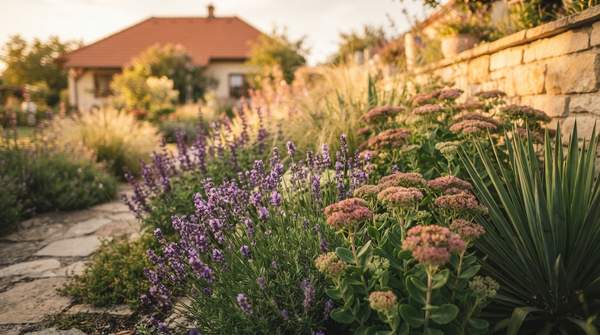
Water conservation is the first practice the Missouri Botanical Garden lists under its sustainability guidance: water plants only when they need it, and control runoff so that water stays on your property rather than carrying pollutants away. The garden also recommends replacing thirsty plants with more drought-tolerant varieties, an approach that reduces demand at the source rather than simply supplying it more efficiently.
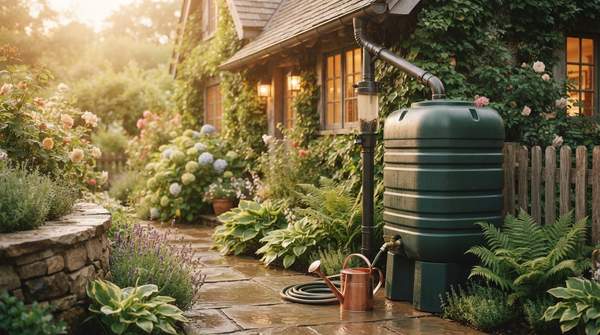
The most impactful structural change is harvesting rainwater. The RHS urges gardeners to "switch from mains to rains" by using a water butt that collects water falling onto the roof, or simply using a watering can instead of a hosepipe. The organization frames this as a carbon-saving measure as well as a water-saving one: its mains2rains campaign has recorded 6.6 million litres of water pledged by gardeners, which it calculates as equivalent to taking 82,385 baths and saving enough carbon to charge 1.3 million smartphones.
Saving water in the garden also contributes to broader resource conservation, reducing dependence on municipal water supplies. The University of Maryland Extension connects home landscape water practices to larger outcomes, noting that steps taken on individual properties can reduce polluted runoff into watersheds such as the Chesapeake Bay. Mulching, covered above, reinforces this principle by keeping moisture in the soil between waterings.