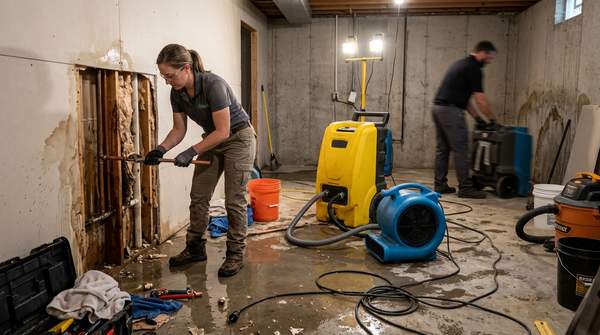
Data from insurance claims shows that 40% of water damage claims in homes over 10 years old are directly attributable to faulty DIY repairs or cheap, substandard professional work, according to the Insurance Institute for Business & Home Safety. Initial attempts to save money often backfire, leading to more extensive and costly damage.
Many homeowners seek to minimize immediate expenses on repairs, believing they are being financially prudent. However, this approach often results in a cycle of repeated failures and escalating costs, creating a fundamental disconnect between short-term financial decision-making and the long-term realities of home maintenance.
Without a shift in mindset towards long-term value, homeowners are likely to continue trading initial savings for significant future financial and emotional liabilities.
Homeowners who opt for the cheapest initial repair often spend 30-50% more over a five-year period due to subsequent failures and re-repairs, according to a Consumer Reports Home Services Survey. The immediate financial drain of spending 30-50% more over a five-year period exposes the false economy of prioritizing low upfront costs in home upkeep. Additionally, the emotional toll of constant home repairs and unexpected failures is cited as a major stressor by 70% of homeowners who prioritize cost savings over quality, as reported by the Pew Research Center.
The Hidden Costs of Cutting Corners
Homes with a consistent record of professional maintenance sell for an average of 10-15% more than comparable homes with deferred maintenance, according to a study by the National Association of Home Builders. The market recognizes sustained quality, as evidenced by homes with consistent professional maintenance selling for an average of 10-15% more. The average homeowner spends 2-4 hours per month dealing with issues stemming from previous low-quality home repairs, as indicated by HomeAdvisor data. What appears to be a saving today often becomes a significant drain on both finances and personal time tomorrow. Furthermore, homes with updated, high-quality HVAC systems experience 15% fewer breakdowns and require 20% less frequent servicing than those with older or cheaply repaired units, according to an HVAC Industry Report, confirming the long-term reliability of quality installations.