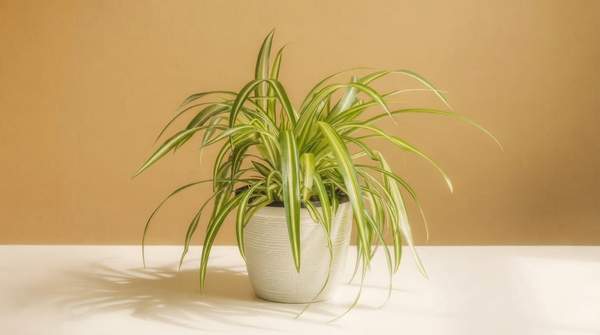
If you share your home with cats or dogs, two houseplants stand out as both non-toxic to pets and frequently credited with air-cleaning ability: the spider plant (Chlorophytum comosum) and the Boston fern (Nephrolepis exaltata). Both appear repeatedly across pet-safety and plant-care guides as safe for cats and dogs, and both are commonly described as efficient air purifiers. But before you fill every windowsill, know the honest caveat: plants can remove some airborne compounds in controlled experiments, yet ordinary numbers of houseplants do not meaningfully clean the air in a typical home. Choose them for the greenery you enjoy and the conditions you can provide.
The Promise and Limitations of Air-Purifying Plants
The idea that houseplants clean indoor air traces largely to NASA's Clean Air Study, which tested plants in sealed, controlled chambers. Follow-up reporting on that research is what most plant guides draw on today when they label species like spider plants and Boston ferns as "air purifying." The specific compounds these plants are credited with filtering—commonly formaldehyde and, for spider plants, xylene—are general attributions to that body of research rather than findings stated for each plant in every source.
The practical catch is scale. As Lively Root's plant-care guide puts it, "Plants can remove some airborne compounds in controlled experiments, but ordinary numbers of houseplants do not meaningfully clean the air in a typical home." A few pots on a shelf cannot match a mechanical air purifier, which works in minutes rather than the gradual, hours-or-days timescale of plants. Filterbuy's overview makes the same point: unlike purifiers, air-purifying plants improve air quality gradually, and keeping their leaves clean boosts their effectiveness.
That doesn't make plants worthless. They contribute to a healthier-feeling indoor environment, add humidity in some cases, and provide a genuine sense of well-being along with their aesthetic appeal. What they cannot do is tell you when your indoor air quality actually declines—a job for a monitor, not a monstera. Treat plants as a complement to ventilation and filtration, not a replacement.
Pet-Safe Air-Purifying Plants: A Quick Comparison
The table below compares the two plants for which the evidence consistently supports a complete picture across pet safety, air-cleaning reputation, light, water, and humidity. Both are confirmed non-toxic to cats and dogs by multiple sources, including Chewy's pet-safety guide and Lively Root's list of non-toxic options. Use it to match a plant to your home's light conditions and your watering habits.
| Plant | Pet Safety | Air Purification Focus | Light Requirement | Watering Needs | Humidity Needs |
|---|---|---|---|---|---|
| Spider Plant | Non-toxic to cats and dogs | Credited with filtering formaldehyde and xylene | Bright, indirect light; tolerates moderate light | Water well, but let soil dry slightly between waterings; drought-tolerant | Low; ordinary household levels suffice |
| Boston Fern | Non-toxic to cats and dogs | Credited with filtering formaldehyde | Indirect light in a cool spot | Keep soil moist but not soggy | High; mist or use a pebble tray, especially in winter |
The trade-off between these two is straightforward. The spider plant is the forgiving choice: Chewy's guide notes it "thrives on neglect" and makes a great beginner's plant, sprouting small white flowers in bright-to-moderate indirect light. The Boston fern is considered one of the most efficient air purifiers in Seventh Generation's roundup, but it demands more of you—specifically humidity and consistent moisture. If your home is dry or your watering routine is sporadic, the spider plant wins on survivability; if you can offer a cool, humid spot like a bathroom, the fern rewards you with lush, arching fronds.
One caution applies to any shopping trip: some popular air-purifying plants are toxic to pets. Aloe, for instance, is safe for humans' minor burns but toxic to dogs and cats, and Seventh Generation flags several celebrated air-purifiers as pet-unfriendly. Always confirm a plant's safety before bringing it home.