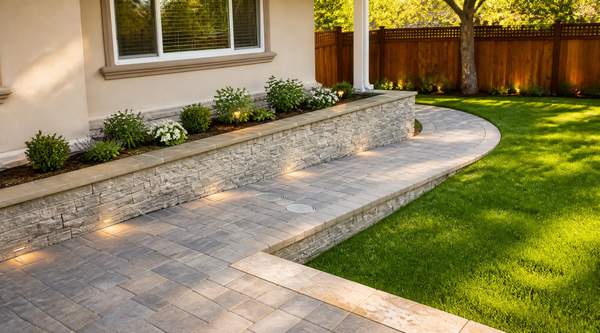
More than half of U.S. homeowners, precisely 54%, undertook renovation projects in 2025, according to HBS Dealer. This widespread engagement confirms a deep and persistent commitment to improving existing properties. Individuals are actively investing in enhancing their living spaces, rather than solely seeking new construction. This scale of activity demonstrates a significant and ongoing dedication to property value and personal comfort across the nation.
Overall private residential construction spending saw a slight decline in early 2026. However, consumer intent for home renovations and long-term market growth projections remain overwhelmingly positive. This creates a tension between the broader housing market's short-term fluctuations and the unwavering commitment homeowners exhibit towards improving their current residences. While new construction faces headwinds, the appetite for home improvements appears robust.
The home renovation market is set for sustained expansion, fueled by homeowner investment and professional expertise, even as new construction navigates economic challenges. This divergence means the renovation sector is decoupling from traditional residential construction metrics, establishing its own resilient growth trajectory driven by distinct market forces.
A Market in Motion: The Scale of Renovation
- USD 2,049.25 billion — The global home renovation market size was valued at this amount in 2025, according to Fortune Business Insights.
- Steady — Home renovation activity remained steady in 2025, according to HBS Dealer.
- 32.12% — North America held this market share in the global home renovation market in 2025, according to Fortune Business Insights.
The global home renovation market, valued at over two trillion U.S. dollars in 2025, stands as a major economic force. North America's substantial share, nearly a third of global activity, proves its strong regional presence and sustained investment. Consistent activity in 2025 establishes a solid foundation for future growth. This shows homeowner commitment is not a fleeting trend, but a consistent aspect of the housing economy.