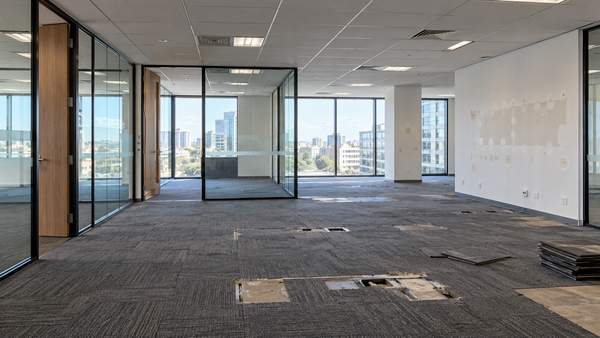
The last desk has been loaded into the removal truck. The computers are gone, the chairs have been collected and the office looks almost empty. But the meeting rooms still have their partitions, the flooring is still down and the ceiling above the workstations looks exactly as it did on the first day of the lease.
For a Sydney business leaving an office, that can be the point when the remaining job comes into focus. Cheap Defit handles commercial strip-outs, defits and make-good work, including office spaces. The work left behind depends on the lease, but clearing out the furniture and returning the premises to the required condition are two different tasks.
An Empty Office Can Still Contain a Tenant’s Fit-Out
There is a practical difference between what a business brings into an office and what it installs there. Desks, monitors and filing cabinets can usually leave with the moving team. Partitions, fitted joinery, floor coverings and altered ceilings may have become part of the premises itself, even if the departing tenant paid to put them in.
That’s where the make-good requirements of the lease become important. Some offices need only limited removal or repair. Others may require significant sections of the fit-out to be taken out and affected areas reinstated. An office looking vacant tells you very little about whether those conditions have been met.
The sensible starting point is the actual condition the tenancy must be returned in. That defines what stays, what goes and what needs repair, rather than assuming that every office has to be stripped back to a bare shell.
Partitions, Doors and Ceilings Do Not Leave With the Furniture
Consider an office with a reception area, two meeting rooms and a series of enclosed workspaces. When the employees leave, the walls that divided those areas remain. So might the internal doors, ceiling grids, plaster ceilings and built-in cupboards that made the fit-out useful in the first place.
Cheap Defit lists removal of walls and doors, plaster ceilings and ceiling grids, joinery and fixtures among its strip-out capabilities. Those services are relevant when a tenancy’s return condition calls for installed elements to be removed. The extent of demolition is determined by the particular space and agreed works, not by the number of rooms the office once contained.