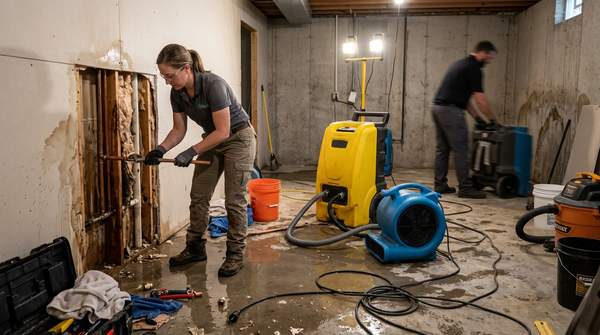
When a property is damaged by water, fire, smoke, or another emergency, choosing a restoration company can feel like one more difficult decision during an already stressful situation. The right provider should be able to assess the damage, explain the work required, and communicate clearly as the recovery process moves forward. ServiceMaster Disaster Associates serves residential and commercial properties throughout Greater Boston and surrounding areas, offering 24/7 emergency disaster restoration services.
Not every property emergency follows the same pattern. A burst pipe in a finished basement, smoke damage after a kitchen fire, and moisture affecting a commercial building all present different challenges. Knowing what to look for in a restoration provider can help property owners make a more informed choice.
Start With the Type of Damage Your Property Has Sustained
Before comparing providers, identify the general nature of the problem. Water damage, fire and smoke damage, mold-related concerns, and weather-related damage may require different expertise, equipment, and restoration procedures.
Water damage can involve extraction, moisture assessment, structural drying, and decisions about affected materials. Fire and smoke restoration may require soot removal, specialized cleaning, odor treatment, and evaluation of heat-damaged components. Moisture-related mold concerns require attention to the conditions that allowed growth to develop, alongside appropriate remediation.
Some incidents involve several types of damage at once. A fire may leave behind water damage from firefighting, while a plumbing leak can create moisture problems in concealed building materials.
A restoration provider should be able to discuss the relevant service category and explain how the initial assessment will establish the scope of work. If the property has specialized equipment, sensitive contents, or multiple affected areas, raise those details when making contact.
Look for Emergency Availability
Property damage does not always happen during business hours. A pipe may burst overnight, a storm may cause water intrusion on a weekend, or a fire may leave a building needing immediate assessment.
Emergency availability matters because a property may remain vulnerable while the owner waits for help. Standing water, continuing leaks, and exposed building areas can contribute to additional damage if they are not addressed appropriately.
When contacting a restoration company, ask whether emergency assistance is available around the clock and how the company handles incoming calls outside ordinary office hours. Confirm what the next step will be after the initial conversation.
Avoid relying on vague promises about response times. Actual arrival and project timelines depend on factors such as location, access, weather, the scale of the incident, and the resources required. A provider should communicate clearly about what can be confirmed rather than guaranteeing an outcome before the circumstances are understood.
ServiceMaster Disaster Associates states that it provides emergency restoration services 24 hours a day. Its regional coverage includes Greater Boston and surrounding communities, extending into the New Hampshire and Maine Seacoast.
For property owners facing an urgent situation, that published availability provides a practical starting point for discussing the incident and determining the appropriate next step.
Ask About Technician Training and Certification
Restoration work can involve more than removing visible damage. Technicians may need to assess moisture, select suitable cleaning methods, handle contaminated materials, or determine how different building components should be treated.
Training and relevant certifications can help property owners evaluate a provider's professional qualifications. When comparing companies, ask what certifications technicians hold and whether those credentials are relevant to the services required.
The Institute of Inspection, Cleaning and Restoration Certification, commonly known as IICRC, establishes recognized standards and training programs in the cleaning, inspection, and restoration industries. Certification does not guarantee a particular result, but it can provide useful information about a technician's professional training.
ServiceMaster Disaster Associates states that all of its technicians are IICRC certified. The company also identifies additional certifications through the ServiceMaster Clean Quality Assured program and the Indoor Quality Association.
These details offer concrete points to discuss when arranging service. Property owners should still ask how the provider plans to address the particular damage affecting their building.
Understand the Assessment and Proposed Scope of Work
Before restoration work begins, property owners should understand what the provider has identified and what it proposes to do about it.
For water damage, the assessment may involve identifying affected materials, evaluating moisture, and determining whether additional drying or removal is needed. After a fire, it may involve examining smoke movement, soot deposits, odor concerns, and the condition of damaged materials.
The initial assessment may reveal issues that were not visible when the property owner first discovered the problem. A leak can affect materials behind a wall, while smoke can reach rooms outside the immediate fire area.
Ask the provider to explain the affected areas, recommended work, and any uncertainties that remain. Find out how changes to the scope will be communicated if additional damage is discovered.
Written estimates, work descriptions, and relevant documentation can help clarify expectations. The level of detail appropriate for a project will depend on its urgency and complexity, but communication should remain understandable throughout the process.
Be cautious of anyone who promises a complete outcome without examining the property or understanding the circumstances. Responsible restoration planning accounts for the actual conditions rather than assuming every job will follow the same sequence.
Consider How the Company Handles Insurance Coordination
Insurance can add complexity to a property restoration project. Owners may need to document the damage, report the incident, provide estimates, and understand what the policy requires before certain work proceeds.
Coverage varies according to the policy and the cause of damage. Sudden plumbing failures, flooding, sewer backups, and fire-related losses may be subject to different terms, exclusions, limits, or deductibles.
A restoration company that helps organize information and communicate about the work can make the process easier to navigate. Ask whether the provider can supply relevant documentation, explain the proposed restoration work, and coordinate with your insurer when appropriate.
ServiceMaster Disaster Associates states that it works with insurance companies to help manage claims. This can support coordination during restoration, although it does not mean that every expense will be covered or that a claim will be approved.
The insurance company remains responsible for determining coverage under the policy. Property owners should communicate directly with their insurer, retain relevant records, and clarify any approval requirements.
Check That the Provider Serves Your Location
A restoration company may advertise broad regional coverage, but property owners should confirm that the provider serves their particular town and can address the type of incident involved.
Greater Boston includes communities with different building types, from older residential properties to multi-unit buildings and commercial spaces. Local service coverage can be especially relevant when emergency access, travel, and coordination affect the response.
ServiceMaster Disaster Associates lists offices in Stoneham, Massachusetts, and Rochester, New Hampshire, and describes a broader service area extending through Greater Boston, surrounding communities, and the New Hampshire and Maine Seacoast. Its business profile also lists Wilmington, Massachusetts, and Nashua, New Hampshire, among its locations.
When calling, provide the property address or town, explain whether the building is residential or commercial, and describe the damage as clearly as possible. Ask the company to confirm coverage and discuss availability for the situation.
Geographic relevance should be established directly rather than inferred from a company's general regional marketing.
Evaluate Communication, Not Just the Equipment
Restoration equipment is important, but property owners also need a provider that communicates well. During a disaster, uncertainty about the work, access restrictions, or next steps can add to an already demanding situation.
A useful provider should explain its findings in plain language, identify immediate concerns, and outline the work it recommends. It should also make clear when other qualified professionals may be needed to address structural, electrical, plumbing, or other specialized issues.
Ask who will be your main point of contact, how updates will be provided, and how questions about the scope of work will be handled. For a commercial building, clarify how communication will work if multiple tenants, departments, or property representatives are involved.
Restoration can uncover additional damage after work has started. A clear process for communicating new findings helps owners understand why the plan may need to change and what decisions may be required.
Ask About Residential and Commercial Capabilities
The needs of a household differ from those of a business. Residential projects may involve living spaces, personal belongings, furniture, and family routines. Commercial projects may involve inventory, equipment, shared building systems, customer access, and operational disruption.
If you own a business or manage a commercial property, ask whether the provider handles commercial restoration and can discuss the practical considerations of your building. If the damage affects a home, explain whether the affected area includes finished rooms, stored belongings, or materials that may be difficult to access.
ServiceMaster Disaster Associates lists both residential and commercial restoration among its services. Its published service categories include water damage, fire and smoke damage, mold, weather damage, and specialty restoration services.
This range provides a basis for discussing the specific incident. The actual restoration plan should be tailored to the property and the damage rather than assumed from a general service list.
Prepare a Few Questions Before You Call
When time allows, a short list of questions can make the initial conversation more productive:
- Do you provide emergency restoration services for this type of damage?
- Do you serve my location?
- What should I do, and what should I avoid, before your team assesses the property?
- What will the initial assessment cover?
- How will you explain the recommended work and communicate any changes?
- Can you assist with restoration documentation and coordination with my insurance company?
If the situation is urgent, do not delay seeking help simply to complete a lengthy comparison. Focus first on safety, preventing further damage where it is safe to do so, and contacting an appropriate provider.
Choose a Restoration Partner With Clear, Relevant Capabilities
Selecting a disaster restoration company involves more than finding someone who can remove visible water or clean soot from a surface. The provider should have relevant training, a suitable response process, and the ability to explain how the work will address the damage.
ServiceMaster Disaster Associates offers 24/7 emergency disaster restoration for residential and commercial properties throughout Greater Boston and surrounding areas. The company states that all technicians are IICRC certified and that it works with insurance companies to help manage restoration claims.
If your property has suffered water, fire, smoke, or other disaster-related damage, contact ServiceMaster Disaster Associates at 866-867-3123. Discuss the location, type of damage, and immediate concerns so the company can help you determine the next steps for your restoration needs.