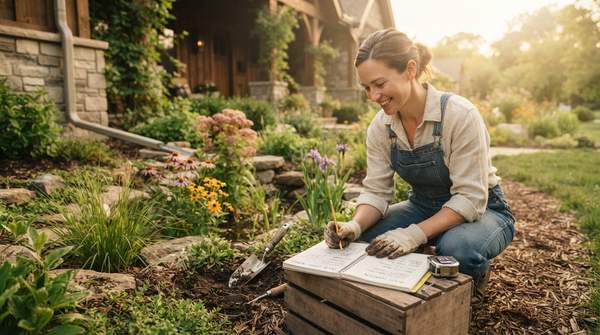
Xeriscaping can save homeowners up to 76% of irrigation demand, significantly reducing household water consumption and utility costs. This approach to landscaping, which focuses on water-wise principles, offers a practical solution for maintaining beautiful outdoor spaces while conserving a vital resource. The substantial reduction in water needs translates directly into tangible financial savings and less time spent on yard maintenance for property owners in 2026.
However, many homeowners believe that water-wise landscaping is difficult to implement or compromises the aesthetic appeal of a garden. This perception creates a tension, as xeriscaping actually simplifies yard care routines while dramatically cutting water use, producing resilient and attractive outdoor environments.
Adopting xeriscaping principles is becoming an essential strategy for sustainable homeownership in an era of increasing water scarcity and environmental consciousness, offering a superior, low-effort landscaping paradigm. For more, see our What are sustainable landscaping principles.
The Water-Saving, Low-Maintenance Landscape
Homeowners can achieve significant reductions in water usage, with xeriscaping saving up to 54% of overall water usage, according to Researchgate. More specifically, this method can reduce irrigation demand by as much as 76%. This directly impacts the most water-intensive aspect of landscaping. While overall water savings are substantial, the most impactful reductions occur precisely where water is traditionally consumed most heavily in a garden.
Drought-tolerant landscaping also leads to a low-maintenance yard, reducing the time and expenses typically associated with irrigation and plant replacement, as noted by Yardzen. This approach encourages plants to develop deep, resilient root systems, cultivating stronger, more self-sufficient ecosystems. It fundamentally shifts the gardener's role from constant intervention to fostering natural resilience. Based on Researchgate's data showing up to 76% irrigation demand savings, homeowners clinging to traditional high-water landscaping are not just wasting water, but actively choosing a more expensive and time-consuming lifestyle.

Implementing the Core Principles of Xeriscaping
Achieving optimal soil health for xeriscaping requires a surprisingly low amount of organic matter, with an ideal range of just 3-5%. This counterintuitive requirement challenges the common gardening belief that more organic matter is always better, instead suggesting a focus on passive moisture retention over constant soil amendment. This approach simplifies yard care dramatically.
Applying a 2-3 inch layer of organic mulch around plants further enhances water conservation by reducing moisture loss, suppressing weed growth, and regulating soil temperature. Mulch creates a protective barrier that maintains consistent soil conditions, minimizing the need for frequent watering. Additionally, efficient irrigation techniques, such as drip irrigation or soaker hoses, drastically reduce water consumption compared to traditional overhead sprinklers. These systems deliver water directly to the plant roots, minimizing evaporation and runoff. Efficient irrigation techniques like drip systems do not merely conserve water; they actively train plants to develop deep, resilient root systems, fostering long-term self-sufficiency rather than creating dependency on constant watering. By focusing on optimal soil composition, strategic mulching, and precise irrigation methods, homeowners effectively implement xeriscaping principles to maximize water conservation and plant vitality.
Avoiding Common Xeriscaping Missteps
A frequent error in xeriscaping involves selecting plants without considering their mature size or specific water needs, leading to overcrowded beds or plants that still require significant supplemental irrigation. Homeowners sometimes assume that all drought-tolerant plants are suitable for every climate zone, overlooking crucial factors like soil type, sunlight exposure, and local humidity levels. This oversight can compromise the garden's health and negate the intended water savings. A 'drought-tolerant' label is not a universal pass; successful xeriscaping demands localized ecological understanding, not just a plant list.
Another pitfall is the complete abandonment of irrigation, even for newly planted xeriscapes. While established plants require minimal water, new plantings need a period of consistent, deep watering to develop robust root systems. Neglecting this initial establishment phase can result in plant failure and wasted investment. Even water-wise systems have a critical, albeit temporary, dependency phase, challenging the 'set it and forget it' misconception. Proper hydrozoning, which groups plants with similar water requirements, is also often overlooked, leading to inefficient watering practices within the same landscape area.
Practical Tips for a Thriving Water-Wise Garden
Start your xeriscape project with a thorough site analysis, mapping areas for sun exposure, shade, and natural drainage patterns. Successful xeriscaping begins indoors with careful strategy, not just with a shovel. Consider incorporating permeable pathways or patios, such as gravel or pavers, to allow rainwater to infiltrate the soil rather than run off, reducing erosion and replenishing groundwater.
When selecting plants for a water-wise landscape, prioritize native species or plants well-adapted to your specific regional climate. These plants are naturally suited to local conditions, requiring less intervention and fostering local biodiversity. A truly sustainable garden is one that works with nature, not against it, leveraging regional ecology for beauty and resilience. Introduce a variety of textures and colors through drought-tolerant shrubs, perennials, and ornamental grasses to ensure year-round visual interest without relying on high-water annuals. Regular, but infrequent, deep watering encourages roots to grow deeper, enhancing plant resilience over time.
What are the 7 principles of xeriscaping?
The seven principles of xeriscaping include planning and design, soil improvement, efficient irrigation, appropriate plant selection, mulching, reduced turf areas, and proper maintenance. Denver Water outlines these principles as a guide for creating water-efficient landscapes. A landscape thrives with minimal supplemental water.
How do I start a xeriscape garden?
Begin by analyzing your yard's specific conditions, including sun exposure, slopes, and existing soil. Design your landscape by grouping plants with similar water needs, a practice known as hydrozoning, and consider replacing high-water turf with drought-tolerant alternatives. Implementing a drip irrigation system can target water delivery efficiently to plant roots, minimizing waste during the establishment phase.
What are the benefits of xeriscaping?
Xeriscaping offers significant water savings, reduced maintenance time and costs, and an increased resilience to drought conditions. By using less water, homeowners also see lower utility bills and contribute to local water conservation efforts. This approach also often reduces the need for chemical fertilizers and pesticides, benefiting local ecosystems and promoting healthier soil.
By Q3 2026, many traditional landscaping companies may face reduced demand for water-intensive services as public awareness and adoption of xeriscaping principles continue to grow across drought-prone regions.