11 Best Drought Tolerant Plants for Low Maintenance Gardens

Sales of potted herbs surged by 10% across RHS retail last year, signaling a quiet revolution in gardening: less fuss, more resilience.

MC
Mason Clarke

April 23, 2026 · 6 min read

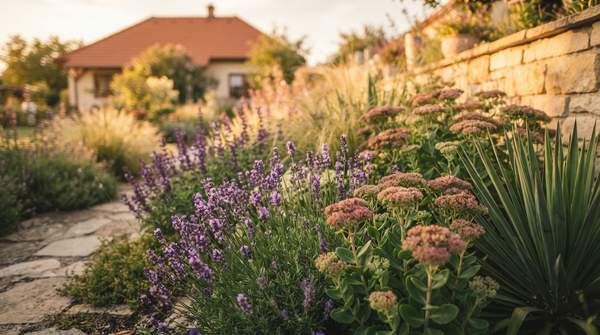
A beautiful, low-maintenance garden filled with drought-tolerant plants like succulents, lavender, and ornamental grasses thriving in the sun.

Sales of potted herbs surged by 10% across RHS retail last year, signaling a quiet revolution in gardening: less fuss, more resilience. A rise in demand for adaptable, compact edibles points to a fundamental reevaluation of garden space, moving towards practical, integrated living. Gardeners increasingly seek both traditional beauty and food production from their plots, but environmental pressures and busy lives necessitate plants demanding less water and maintenance. The future of gardening will likely emphasize innovative, adaptable plant varieties and water-saving techniques, transforming traditional garden aesthetics into more sustainable, functional spaces.

Tabletop vegetable plants, like dwarf aubergines, chillies, peppers, and tomatoes, are predicted to be a top garden trend for 2026, according to Arizona Water.

" rel="noopener noreferrer">The Guardian. The prediction, coupled with the surge in potted herb sales, confirms gardening's future is compact, edible, and integrated into daily life, not confined to traditional plots. Furthermore, 'in-and-out plants' that adapt to various environments are gaining popularity, as consumers prioritize versatility and adaptability over strict indoor/outdoor classifications.

The Resilient Garden: Top Drought-Tolerant Picks

Drought-tolerant plants are indispensable for future-proof gardening. They conserve water, support pollinators, and simplify garden care, making them a cornerstone for resilient landscapes.

1. Black-eyed Susan (Rudbeckia spp.)

Best for: Gardeners seeking deer-resistant, long-blooming flowers.

Black-eyed Susans thrive in zones 3 to 9, according to Almanac. Their wide zone compatibility combined with deer resistance and long-blooming, daisy-like flowers, as noted by Garden Design, makes them a versatile choice for many gardens.

Strengths: Wide zone compatibility, deer resistance, extended bloom period. | Limitations: May self-seed aggressively in some conditions. | Price: Varies by nursery and size.
2. Beardtongue (Penstemon spp.)

Best for: Attracting pollinators with vibrant, nectar-rich blooms.

Beardtongue varieties, diverse North American natives, attract pollinators with nectar-rich tubular flowers, notes Garden Design. Cultivars like Harlequin™ Pink Beardtongue, reaching up to 22 inches tall and 16 inches wide (Monrovia), offer specific size options for various garden designs while supporting local ecosystems.

Strengths: Pollinator attraction, native status, diverse forms. | Limitations: Requires well-drained soil to prevent root rot. | Price: Varies by cultivar and size.

3. Asters (Symphyotrichum spp.)

Best for: Late-season color and supporting local pollinators.

Asters tolerate diverse conditions, attracting pollinators with late-season, daisy-like flowers in various colors, as reported by Garden Design. Their adaptability makes them crucial for extending garden interest and ecological support into autumn.

Strengths: Adaptable to diverse conditions, late-season blooms, pollinator support. | Limitations: Some varieties may require staking. | Price: Varies by species and size.

4. Stonecrop (Sedum spp.)

Best for: Extremely low-maintenance groundcover or container planting.

Stonecrop thrives in zones 3 to 10, according to Almanac. Its broad adaptability across many climates makes it an exceptionally versatile, low-maintenance choice for groundcover or containers.

Strengths: Exceptional zone compatibility, minimal water needs, varied forms. | Limitations: Can be susceptible to overwatering. | Price: Varies by variety and form.

5. Milkweed (Asclepias spp.)

Best for: Supporting monarch butterflies and other pollinators.

Milkweed grows in zones 3 to 10, according to Almanac. Its wide zone compatibility makes it highly adaptable for diverse water-wise gardens, crucially supporting monarch butterflies as a host plant.

Strengths: Wide zone compatibility, critical monarch butterfly host plant. | Limitations: Can be toxic if ingested. | Price: Varies by species and size.

6. Lavender (Lavandula spp.)

Best for: Fragrant, evergreen foliage in sunny, dry locations.

Lavender thrives in zones 5 to 11, according to Almanac. Its suitability for many regions seeking drought-tolerant options, combined with aromatic foliage, makes it a popular and practical choice.

Strengths: Wide zone compatibility, aromatic foliage, deer and rabbit resistant. | Limitations: Requires excellent drainage; dislikes humidity. | Price: Varies by cultivar and size.

7. Blazing Star (Liatris spp.)

Best for: Vertical interest and attracting native pollinators.

Blazing Star grows in zones 3 to 9, according to Almanac. Its resilience across various climates makes it an excellent choice for water-wise gardens, adding unique vertical interest and attracting native pollinators.

Strengths: Good zone compatibility, attracts butterflies and hummingbirds, unique flower spikes. | Limitations: May flop in rich soil; can be slow to establish. | Price: Varies by species and size.

8. Sunstar™ Gold Coreopsis

Best for: Compact, long-blooming yellow flowers in sunny borders.

Sunstar™ Gold Coreopsis, detailed by Monrovia, reaches up to 24 inches tall and 30 inches wide. Its compact size and bright yellow blooms make it ideal for sunny borders requiring specific dimensions.

Strengths: Specific growth metrics for planning, bright yellow blooms. | Limitations: Requires full sun for best performance. | Price: Varies by retailer.

9. Evolution™ Fiesta Coneflower

Best for: Vibrant, long-lasting color in mixed perennial beds.

Evolution™ Fiesta Coneflower grows up to 20 inches tall and 18 inches wide, according to Monrovia. These specific growth metrics allow for precise placement, ensuring vibrant, long-lasting color in mixed perennial beds.

Strengths: Specific growth metrics, robust flowering. | Limitations: Needs adequate air circulation to prevent powdery mildew. | Price: Varies by retailer.

10. Desert Eve™ Terracotta Yarrow

Best for: Heat-tolerant, low-maintenance color with an earthy tone.

Desert Eve™ Terracotta Yarrow reaches up to 20 inches tall and 24 inches wide, as reported by Monrovia. Its heat tolerance and unique terracotta color provide low-maintenance, earthy tones for challenging garden spots.

Strengths: Heat tolerance, specific growth metrics, unique terracotta color. | Limitations: Can spread aggressively in ideal conditions. | Price: Varies by retailer.

11. Dark Matter™ Meadow Sage

Best for: Deep purple spires in sunny, dry garden spots.

Dark Matter™ Meadow Sage grows up to 16 inches tall and 12 inches wide, according to Monrovia. Its compact size and deep purple spires make it perfect for sunny, dry garden spots where space is a consideration.

Strengths: Compact size, dark purple flowers, drought tolerant. | Limitations: Requires full sun and well-drained soil. | Price: Varies by retailer.

Innovating for a Drier Future: Beyond Traditional Varieties

Horticultural innovation actively creates more resilient plant varieties, adapting even beloved traditional plants to drier conditions. Rose breeders, for instance, develop new cultivars by crossbreeding with central Asian varieties like Rosa persica to enhance drought and disease resistance, according to The Guardian. The proactive effort reveals that deeply rooted horticultural traditions are bending to environmental pressures, confirming a broader industry-wide pivot towards resilience over pure aesthetics.

CharacteristicTraditional Ornamental Plants (e.g. Classic Roses)Innovated Resilient Varieties (e.g. Rosa persica Crosses)
Water NeedsHigh; regular, deep watering requiredLower; enhanced drought tolerance
Disease ResistanceModerate; often susceptible to common diseasesEnhanced; bred for improved resistance
Primary Breeding GoalAesthetic beauty, bloom size, fragranceResilience, adaptability, reduced maintenance
Maintenance LevelHigh; frequent care, pruning, pest managementLower; less intensive care required

How We Chose Our Water-Wise Selections

Recommendations for water-wise plants are dynamic, based on continuous research and adaptation. The list was updated in 2022, according to AZ Water. This regular update shows an evolving understanding of optimal water-wise practices and the continuous identification of new, suitable species. Our selections prioritize plants with proven drought tolerance, broad adaptability, and additional benefits like pollinator support or deer resistance, meeting the needs of modern low-maintenance gardening.

Maximizing Efficiency: Beyond Plant Choice

Beyond plant selection, simple techniques maximize water efficiency and create a truly low-maintenance, resilient garden. Mulch reduces water evaporation, regulates soil temperature, and suppresses weeds, according to the National Garden Bureau. Applying a 2-4 inch layer of organic mulch around plants significantly decreases watering frequency, simplifies garden care, and promotes healthier soil and plant growth.

Your Questions Answered: Embracing Water-Wise Gardening

What are the easiest drought tolerant plants to grow?

Many native species are easiest, already adapted to local conditions. Groundcovers like Creeping Thyme or various sedums require minimal attention once established, offering aesthetic appeal and soil protection with little effort.

What plants need the least amount of water?

For the lowest water needs, consider succulents, cacti, and desert-adapted shrubs like Desert Spoon (Dasylirion wheeleri) or Red Yucca (Hesperaloe parviflora). These plants store water and thrive in arid environments with infrequent watering.

What are the best low maintenance plants for xeriscaping?

Xeriscaping focuses on water-efficient landscaping through thoughtful design. Ideal plants include Agave, Lavender, and various ornamental grasses. Implementing hydrozoning, which groups plants with similar water needs, further reduces maintenance and optimizes water use for a truly resilient garden.