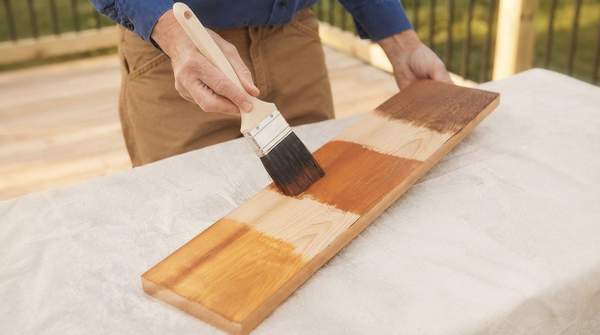
If you want a deck you can mostly ignore, composite is the lower-commitment choice: it needs occasional soap-and-water cleaning and never requires sanding, staining, or sealing. A wood deck, by contrast, needs refinishing every 1–2 years, regular cleaning with specialized products, and periodic board replacement to stay sound. That difference in recurring labor—not just the purchase price—is what should drive your material decision.
Wood vs. Composite: An Overview of Deck Maintenance
The two materials follow fundamentally different maintenance philosophies. Fiberon, a composite decking manufacturer, describes its product as arriving finished: it "never needs sanding, staining, or painting -- just an occasional soap and water cleaning," while wood "needs to be finished after installation and then refinished every 1-2 years." Wood's lower upfront cost comes bundled with an ongoing obligation; composite's higher price buys the elimination of that obligation.
Abbey Fence & Deck Company frames the choice the same way: the primary difference between the materials is maintenance, with each requiring distinct cleaning and preservation methods because their surfaces weather differently under rain, foot traffic, and UV exposure. This guide covers generic wood decking (such as pressure-treated lumber) versus composite; exotic hardwoods and PVC follow different rules.
Deck Maintenance Comparison: Wood vs. Composite
The table below contrasts the core tasks side by side, so you can see exactly which steps composite eliminates and which recur for wood.
| Maintenance Task | Wood Deck Requirements | Composite Deck Requirements |
|---|---|---|
| Routine cleaning | Regular scrubbing with a wood-specific deck cleaner or warm water and gentle dish soap; sweeping away leaves, dirt, and debris | Sweeping and washing with soap and water as needed; a dedicated non-abrasive composite cleaner at least twice a year |
| Staining and sealing | Refinishing every 1–2 years, with staining and sealing every few years for protection and appearance | Not required—composite has built-in moisture resistance and color retention |
| Sanding and painting | Required as part of the refinishing cycle, especially with sun exposure | Never needed |
| Inspection and repairs | Check for loose boards and protruding nails; may require replacing deck boards annually | Basic cleaning and seasonal care; board replacement is rare |
| Winter damage risk | High—rot, mold, and splitting, accelerated by freeze-thaw cycles | Low—moisture-resistant |
Read down the wood column and a pattern emerges: the tasks stack. Cleaning, staining, sealing, board replacement, and fastener maintenance all recur, and in cold climates freeze-thaw cycles accelerate the wear, as Deckmasters' Mark Voigt notes for regions like Minnesota and North Dakota. Read down the composite column and the recurring tasks shrink to cleaning alone.