In a 3,000-square-foot Federal-style townhouse in Boston, the entrance hall ceiling was dramatically lifted to five meters. This bold architectural move, featured in Elle Decor, instantly set the stage for a British-inspired transformation, defying its American origins. American homeowners increasingly seek the charm of British interiors, yet many properties lack the specific architectural foundations to easily replicate the look. Apartment Therapy notes that authentic British interiors are difficult to achieve without elements like a Cotswolds cottage. This tension means adapting British decor for American homes increasingly relies on strategic design choices: specific sourcing, eclectic layering, and a meticulous construction of charm, rather than mimicking traditional British architecture.
1. Layering for Depth
Best for: Homeowners seeking depth and a collected feel in their British-inspired spaces.
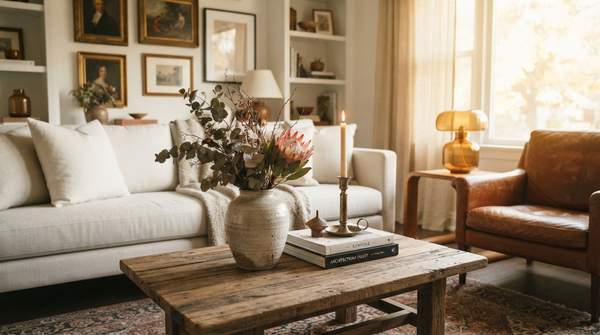
Layering brings depth and character, creating a harmonious yet dynamic environment, according to House Beautiful. This approach, often seen in window treatments, offers a collected, lived-in feel. British design education itself emphasizes this layering, influencing projects and overall aesthetics. For American homes, this means consciously building visual interest through textiles, art, and furniture, rather than relying on sparse arrangements.
Strengths: Creates visual interest and a sense of history | Limitations: Can appear cluttered if not executed thoughtfully | Price: Moderate to High, depending on textile choices
2. Mixing Patterns for Eclectic Interiors
Best for: Those who want to infuse personality and a curated feel into their decor.
British design thrives on mixing patterns—florals with stripes, checks with chintz, as Country Living highlights. This bold approach, where more pattern and color are often embraced, creates a timeless trend, allowing a home to evolve organically, notes House Beautiful. It’s a powerful way to infuse personality, transforming a space from generic to deeply personal.

Strengths: Adds character and vibrancy | Limitations: Requires a discerning eye to avoid visual chaos | Price: Varies greatly based on fabric and furniture choices
3. Sourcing UK-based Brands for Authenticity
Best for: Dedicated designers and homeowners prioritizing genuine British craftsmanship.
For true British style, sourcing UK-based brands for furniture, fabrics, and fittings is key, as seen in the Boston townhouse project, reports Architectural Digest. Specifics like Fromental's ‘Kiku’ wallcovering and Farrow & Ball’s Arsenic green paint (Elle Decor) demonstrate this commitment. While it means higher costs and import logistics, it guarantees an authentic connection to British craftsmanship, elevating a space beyond mere imitation.
Strengths: Ensures authentic materials and design | Limitations: Higher costs due to import and shipping | Price: High
4. The Unmanicured Aesthetic
Best for: Creating a lived-in, comfortable, and personally expressive environment.
The 'non-matchy-matchy' aesthetic allows for creative expression and unexpected design, notes House Beautiful. This relaxed, authentic approach, highlighted by Elle Decor, ensures interiors feel genuinely lived-in, not overly manicured. It encourages homeowners to trust their instincts and build a space that truly reflects their journey.
Strengths: Fosters unique, personal spaces | Limitations: Requires confidence in mixing diverse elements | Price: Flexible, depends on existing pieces and new acquisitions
5. Skirted Furniture for Softness
Best for: Adding a touch of traditional elegance and concealing storage.
Skirted furniture, from fabric-draped tables to gathered chair skirts, is a fundamentally British look enjoying a resurgence, notes Country Living. This detail instantly introduces softness and a sense of history, creating a cozy, inviting atmosphere. It’s a simple yet powerful way to add traditional elegance and hide practicalities.
Strengths: Provides a classic, elegant touch | Limitations: Can appear dated if fabric choices are not contemporary | Price: Moderate
6. Blending Modern Accents with English Aesthetic
Best for: Those seeking a fresh, updated take on traditional British style.
Modern accents, like mid-20th-century Scandinavian chairs or a Swedish rug, can subtly tweak a traditional English aesthetic, as seen in the Boston renovation, reports Architectural Digest. This thoughtful blend ensures spaces feel current while retaining their historical charm. It prevents a room from feeling like a museum, instead making it a dynamic, evolving home.
Strengths: Prevents spaces from feeling overly traditional | Limitations: Requires careful selection to maintain balance | Price: Varies greatly by piece
7. Artistic/Hand-painted Wallcoverings
Best for: Creating a dramatic focal point and adding bespoke artistry to walls.
Hand-painted wallcoverings, like Fromental's ‘Kiku’ in the Boston townhouse (Elle Decor), offer a dramatic focal point. These artistic elements introduce bespoke character and a layer of undeniable sophistication. They transform a wall into a work of art, making a powerful statement in British-inspired interiors.
Strengths: Offers unique visual impact and luxury | Limitations: High cost and specialized installation | Price: Very High
8. Dramatic Architectural Features
Best for: Homeowners willing to undertake significant structural changes for grand impact.
Dramatic architectural features, such as lifting the entrance hall ceiling to five meters in the Boston townhouse (Elle Decor), create an immediate sense of scale and grandeur. These bold interventions are fundamental to certain British aesthetics, proving that structural changes can profoundly transform a space, even in American homes.
Strengths: Transforms the spatial experience dramatically | Limitations: High cost and complex construction | Price: Very High
Beyond Architecture: Principles of British Style
| Design Principle | Core Approach | Impact on Authenticity | Consideration for American Homes |
|---|---|---|---|
| Strategic Sourcing | Prioritizing UK-based brands for furniture, fabrics, and fittings | Direct connection to British craftsmanship and design heritage | Requires higher investment due to import costs and shipping logistics |
| Non-Matchy Aesthetic | Embracing creative expression and unexpected design moments in decor | Avoids a sterile, replicated feel, creating a genuinely lived-in atmosphere | Demands thoughtful curation and confidence in mixing diverse elements |
| Layered Design | Building depth and character through multiple textures, patterns, and furniture pieces | Creates a harmonious yet dynamic environment with a collected, storied look | Prevents flatness in modern spaces and adds visual richness |
The Blueprint for British Charm in America
Achieving authentic British charm in American homes is less about architectural inheritance and more about deliberate, thoughtful design. The Boston townhouse, renovated by Nina Farmer, proves that even without inherent period architecture, British style thrives through strategic sourcing, layering, and a 'non-matchy' aesthetic (Architectural Digest, House Beautiful). This approach creates genuinely collected, lived-in spaces. By Q4 2026, more American homes will likely embrace these engineered British aesthetics, moving beyond superficial styling to create truly unique interiors.