November is the month that decides how your garden wakes up. The work divides cleanly into five areas—perennial and flower beds, vegetable and fruit gardens, lawns, trees and shrubs, and tools and general cleanup—and within each, the priorities are consistent: sanitation first, winter protection second, and soil preparation for spring planting third. Expert sources from university extension programs across several U.S. regions agree on the underlying principle. Fall cleanup is not cosmetic tidiness; it is a deliberate act of pest and disease prevention that pays off the following season.
Introduction: Setting the Stage for Spring
As temperatures cool and gardens transition into winter dormancy, University of Missouri Extension guidance—outlined in a November garden column by horticulturalist Dhruba Dhakal in the Fulton Sun—describes November as an important month for completing final outdoor tasks, with the express goal of setting the stage for healthy growth next spring. The Pennsylvania Horticultural Society makes the same point from a different angle: when cleaning up garden beds, compost the healthy material but "toss sad and sorry looking plant detritus far from the garden, otherwise bugs and diseases can hang out over the winter and return to haunt you."
That framing drives every recommendation in this article. Each task below does one of three things: it removes material that pests and pathogens would otherwise overwinter in, it insulates plants against freeze-thaw damage, or it prepares soil and orders supplies so spring planting can begin early. Timing details vary by region—strawberry mulching waits for consistent cold, rose cleanup waits for hard frost—but the sequence of priorities holds for temperate climates generally. Gardeners in warmer or colder zones should shift dates to match their local conditions rather than change the order of work.
Perennial & Flower Beds: Protecting Your Blooms
November is still planting season for spring-flowering bulbs. North Carolina Cooperative Extension agent Jessica Strickland identifies November as the time to plant daffodils, crocus, hyacinths, and tulips. Newly planted bulbs deserve slightly thicker mulch than established perennials, per the Pennsylvania Horticultural Society, which suggests mowing leaves once or twice before piling them 3 to 5 inches deep on empty beds, with a thinner layer over perennials and a thicker one over fresh bulb plantings.
For the insulating layer itself, University of Minnesota Extension recommends mulching with what you already have. Rake 6 to 8 inches of leaves into garden beds to protect tender perennials and build soil organic matter—but recognize the trade-off: leaves tend to smash down and form a mat, so they insulate less effectively than straw. If you have leftover straw bales, take the bale apart and fluff the straw before covering plants rather than dropping whole mats onto them.
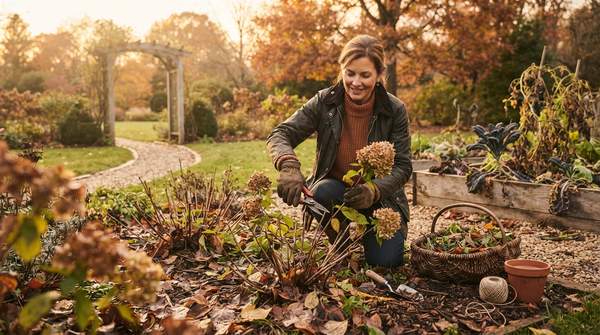
Rose beds need sanitation before protection. University of New Hampshire Extension advises waiting until hard frosts have killed any remaining leaves on hybrid tea and floribunda roses, then cleaning up and disposing of both leaves and diseased or damaged stems to minimize disease carryover. Strickland's advice for November matches: "Be sure all diseased leaves are raked up and disposed of."
Vegetable & Fruit Gardens: Harvest, Clean, and Prepare
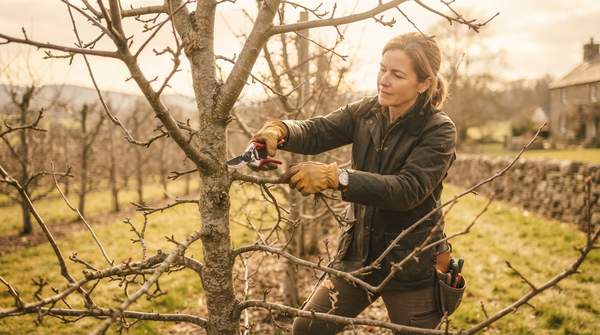
Sanitation is the single most effective tool in the home orchard. Missouri Extension guidance calls good sanitation "one of the most effective ways to reduce disease and insect problems in home orchards": remove and dispose of fallen, spoiled, or mummified fruit from beneath trees to eliminate overwintering sites for pests and diseases. The same sources recommend inspecting trees now for limbs that showed disease symptoms or structural problems during the growing season.
In the vegetable garden, Strickland recommends tilling to expose many insect pests to birds and winter cold, "reducing the numbers in next year's garden." Note the scope of that claim: it targets insect pests specifically and is not presented as a control for soil-borne diseases. She also advises trimming existing asparagus foliage this month, and pulling mulches back several inches from the base of fruit trees so bark does not suffer injury from hungry mice and voles.
Strawberries have a precise trigger for winter protection. Per Missouri Extension, apply a loose layer of clean straw once temperatures consistently approach 20 degrees Fahrenheit, covering the plants just barely, then adding more straw after the mulch settles. Margaret Roach of A Way to Garden adds that soil preparation for spring strawberry and asparagus plantings should happen now, so bare-root plants ordered over the winter can go in extra early. She mulches existing strawberry plants with a couple of inches of straw, and lets asparagus foliage go brown on its own rather than cutting it back prematurely.
Fig trees need attention in colder climates. The Pennsylvania Horticultural Society describes figs as "borderline-hardy" and sensitive to cold weather, and recommends leaves as winter protection for them. Stark Bro's Nurseries, which publishes guides on fig tree preparation including cutting back and mulching, is among the sources addressing cold-climate fig care; the specific mulch depth for figs varies with local conditions, so follow your regional guidance.
Lawns: Final Care for a Green Start
Leaves are the main November threat to lawn health. Strickland's warning is direct: piles of leaves "can become wet blankets that smother your lawn," so remove fallen leaves as soon as possible to keep sunlight reaching the grass. The Pennsylvania Horticultural Society notes November is a great time for one final mow, and its writer's own practice—mowing leaves once or twice before piling them onto empty beds—turns the cleanup burden into free mulch and compost material. Leaves are also, in that source's words, "an invaluable source of carbon" that balances the nitrogen-rich material in a compost pile or worm bin.
For lawns in regions where winter weeds are a problem, Strickland also suggests applying a pre-emergence herbicide in November if you have not already done so. That recommendation is region-specific to North Carolina conditions, so check your local extension guidance before treating.
Trees & Shrubs: Winterizing Woody Plants
Two November tasks protect woody plants. First, sanitation and monitoring: Strickland advises checking cypress and other evergreens for bagworms and destroying the capsules to reduce next year's pest population. Second, water: A Way to Garden ranks unfrozen, available water 365 days a year as the number one support you can give birds and wildlife, and that source also keeps water gardens ice-free so overwintering frogs, salamanders, and fish do not suffocate.
When you tidy woody plants, keep pruning functional rather than aesthetic. A Way to Garden recommends removing suckers and water sprouts, and doing any cleanup of weak or damaged growth before harsh winter weather, since weaknesses left in place invite tearing and unnecessary extra damage. That source is explicit that aesthetic pruning should wait. In the orchard, remember to keep mulch pulled back from trunks to deny rodents access to bark.
Tools & General Cleanup: Ready for Next Season
End the month by putting your equipment in order. Missouri Extension's November guidance includes cleaning and maintaining garden tools as part of end-of-season care; the Fulton Sun column frames tool maintenance alongside the rest of the month's final outdoor tasks. Potted plants need the same foresight. The gardening resource joegardener warns that potted perennials that are not root hardy face real risk when temperatures dip into the 20s, teens, or single digits, so locate protected storage spots before hard cold arrives.
Leaves you gather but do not use as mulch still have value. A Way to Garden describes corralling collected leaves in a simple wire enclosure where they gradually break down into leaf mold, a valuable organic addition to garden soil. That gives November's biggest cleanup job two payoffs: cleaner beds now and richer soil later.
November Garden Chores Checklist
The table below synthesizes the recommendations above into a single prioritized plan you can work through systematically. Complete the sanitation rows before the protection rows in each area, since removing diseased material first prevents it from being trapped under mulch all winter.
| Garden Area | Task | Purpose | Technique / Material |
|---|---|---|---|
| Perennial & Flower Beds | Plant spring bulbs | Root establishment before spring | Plant daffodils, crocus, hyacinths, tulips; mulch new bulb plantings slightly thicker than perennial beds |
| Perennial & Flower Beds | Winter mulch | Insulate crowns, prevent frost heave, build soil organic matter | 6–8 inches of loose mulch over dormant crowns; shredded leaves or fluffed straw, applied loosely so air is trapped |
| Perennial & Flower Beds | Rose sanitation | Minimize disease carryover | After hard frost kills leaves, dispose of leaves and diseased or damaged stems from hybrid tea and floribunda roses |
| Vegetable & Fruit Gardens | Orchard sanitation | Eliminate overwintering sites for pests and diseases | Remove fallen, spoiled, or mummified fruit; inspect trees for diseased or damaged limbs |
| Vegetable & Fruit Gardens | Till the vegetable garden | Reduce next year's insect pest numbers | Till to expose insects to birds and winter cold; targets insects specifically |
| Vegetable & Fruit Gardens | Strawberry protection | Insulate crowns through winter | Loose clean straw, just covering plants, applied when temperatures consistently approach 20°F; top up after settling |
| Vegetable & Fruit Gardens | Fig protection | Shield borderline-hardy trees from cold | Mulch heavily with leaves around the base in colder climates |
| Vegetable & Fruit Gardens | Soil preparation | Enable extra-early spring planting | Prepare strawberry and asparagus beds now; order bare-root plants for late-winter delivery |
| Lawns | Leaf removal and final mow | Prevent smothering, maintain sunlight | Remove leaf piles promptly; mow once more, and mow leaves before piling them on beds as mulch |
| Trees & Shrubs | Bagworm check | Reduce next year's pest population | Check cypress and other evergreens; remove and destroy bagworm capsules |
| Trees & Shrubs | Water and mulch placement | Sustain woody plants; prevent rodent bark injury | Keep unfrozen water available; pull mulch back several inches from tree bases |
| Tools & General Cleanup | Tool and pot care | Spring readiness; protect marginally hardy potted plants | Clean and maintain tools before storage; move non-root-hardy potted perennials to protected spots before deep cold |
| Tools & General Cleanup | Leaf storage | Build soil amendment for free | Wire enclosure to hold leaves as they break down into leaf mold |
Ensuring a Healthy Spring: Your Winter Preparation Pays Off
Prioritize and complete November garden chores to protect plants from winter damage and reduce future pest and disease pressure. The payoff is concrete and observable: vigorous spring growth, fewer pest issues, and healthy plant revival in the following season. Sanitation rows in the checklist are your highest-leverage work—Missouri Extension, North Carolina Cooperative Extension, and the Pennsylvania Horticultural Society all tie fall removal of diseased and infested material directly to lower pest and disease pressure next year, though none presents it as eliminating every problem. Protection rows depend on local timing: watch for the specific triggers in your area—hard frost for rose cleanup, consistent 20°F temperatures for strawberry mulching—and act when they arrive rather than by the calendar.
Sources
- GARDEN SPOTLIGHT: November chores set stage for healthy spring landscape — Fultonsun
- November Gardening Tips: Your Monthly Checklist — Pennsylvania Horticultural Society
- November Gardening Tips - Wayne County Center
- November garden checklist — Extension
- Winter Protection of Roses [fact sheet] — Extension
- Winter Preparation for Fig Trees: Cutting Back and Mulching — Stark Bro's Nurseries & Orchards Co.
- november garden chores — A Way To Garden
- November Gardening Checklist | Tasks to Prioritize — joegardener® | Organic Gardening Like a Pro