Most shrubs should not be pruned in the fall, because a fall cut can remove the very buds that would open into next spring's flowers. The exceptions are shrubs that bloom on new wood—growth produced in the current season—such as butterfly bush and summer-blooming spirea. For everything else, the safe fall job is limited to removing dead, damaged, or diseased branches. Here is the principle, the named candidates, and a decision framework you can apply to any shrub in your yard.
The Fall Pruning Dilemma: To Cut or Not to Cut?
Fall pruning advice often sounds contradictory: some sources warn against it entirely, while others list shrubs to trim before winter. The tension resolves once you know where a shrub forms its flower buds. The timing for pruning most shrubs depends on when they flower. Shrubs that flower before the end of June should be pruned immediately after their blooms fade. For shrubs that flower in summer or autumn, pruning should occur in late winter or early spring before new growth begins.
That one distinction settles timing for the majority of shrubs. The New York Botanical Garden's Mertz Library research guide offers the same rule of thumb from the other direction: plants that flower early in spring or on old wood should be pruned immediately after they flower. Fall, in other words, is rarely the right window for discretionary shaping—but it is not a blanket prohibition either.
The Golden Rule: New Wood vs. Old Wood
The controlling question is whether your shrub blooms on old wood or new wood. Old-wood bloomers, as Proven Winners explains, create their flower buds for the next year almost as soon as they finish blooming in the current year, so their buds are present on the plant for most of the year. Cut those stems in fall and you are cutting off next season's flowers.
New-wood bloomers work differently. Writing for Hydrangea.com, Stacey Hirvela explains that these shrubs create their flower buds only once they begin growing in spring, on the fresh growth of the current season. Fall cuts therefore cannot remove buds that don't yet exist. As a general pattern, the earlier in spring a plant blooms, the more likely it flowers on old wood.
Shrubs That Bloom on New Wood: Your Fall Pruning Candidates
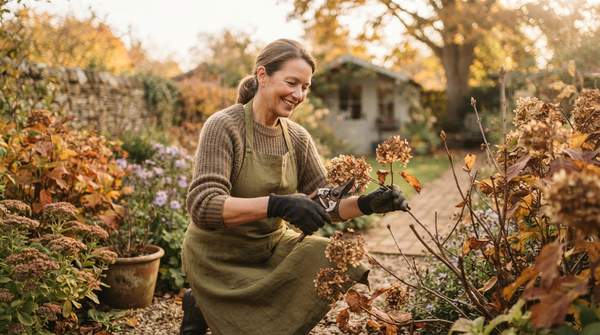
The evidence supports a short, specific list of shrubs that can be worked on in fall. Nature Hills Nursery's fall pruning guide, written by Charlotte Weidner, names butterfly bush (Buddleia) and summer-blooming spirea varieties such as Japanese spirea as reliable new-wood bloomers suited to shaping, thinning, or rejuvenating before winter. For butterfly bush, the guide recommends cutting back old canes by about one-third to refresh growth and promote stronger blooms; summer-blooming spirea can be lightly trimmed in fall.
Hydrangea.com's list of new-wood bloomers adds roses, beautyberry (Callicarpa), blue mist spirea (Caryopteris), most abelia, rose of Sharon, and crapemyrtle. The University of Connecticut's Integrated Pest Management program notes that most shrubs blooming in summer and fall, on new wood, are pruned in late winter or early spring before growth begins—so fall trimming and late-winter pruning are both workable windows for this group, with light fall trimming keeping plants vigorous. Note that some shrubs, including certain hydrangeas, bloom on both old and new wood, so the new-wood rule applies cleanly only to shrubs that bloom exclusively on new wood.
Shrubs to Avoid Pruning in Fall: Protecting Next Season's Flowers
Spring bloomers are the group to leave alone in fall. Because they set buds on old wood shortly after flowering, fall cuts remove buds that have already formed. Proven Winners lists azalea, deutzia, elderberry, forsythia, lilac, loropetalum, mock orange, ninebark, quince, and weigela as old-wood bloomers that should only be pruned immediately after they flower. Hydrangea.com's examples add flowering quince and rhododendron.
One caution from Nature Hills: spirea itself splits by type. Spring-blooming varieties like bridal wreath spirea bloom on old wood and should only be pruned immediately after flowering in spring—not in fall—while summer-blooming varieties are safe for light fall trimming. These lists represent common types, not an exhaustive catalog, and exact bloom timing varies by climate and species.
The Universal Exception: Safe Maintenance Pruning
One fall job is safe on almost any shrub: maintenance pruning, defined by Nature Hills as removing the "three Ds"—dead, damaged, or diseased wood. Because you are only removing non-productive wood, this cleanup does not affect next year's blooms regardless of shrub type. The guide describes it as improving plant health, preventing pest issues, and enhancing winter hardiness.
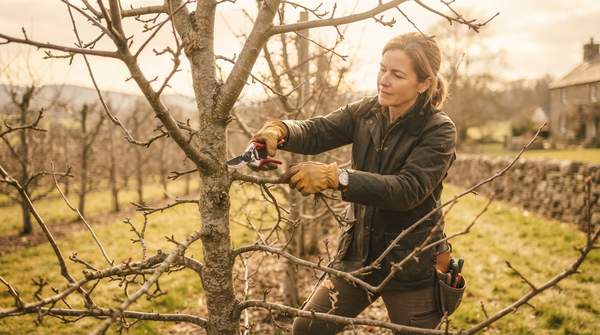
The technique is straightforward: cut damaged branches back to healthy tissue using clean, sharp pruners, and remove any crossing or rubbing branches that could cause future damage. Nature Hills suggests focusing this work from late October through November, when plants enter dormancy. This is health-and-structure pruning, not the shaping or size reduction that puts flower buds at risk.
Fall Pruning Decision Framework
Use this two-step diagnostic—bloom time, then wood type—to reach a "prune" or "wait" decision for any shrub, preventing the accidental removal of next year's flowers.
| Step | Question | If Yes | If No |
|---|---|---|---|
| 1 | Does it bloom before the end of June (spring)? | It blooms on old wood—wait. Prune within weeks after flowers fade next season. | Go to Step 2. |
| 2 | Does it bloom after June, in summer or fall (new wood)? | Fall pruning can proceed once dormant, or prune in late winter before growth begins. | Check whether it blooms on both woods (some hydrangeas do) and prune conservatively. |
| Group | Wood Type | Fall Recommendation | Examples |
|---|---|---|---|
| Spring bloomers | Old wood—buds present most of the year | Do not prune in fall; prune right after flowering | Lilac, forsythia, azalea, bridal wreath spirea, flowering quince, rhododendron, weigela |
| Summer/fall bloomers | New wood—buds form on current-season growth | Light fall trimming or late-winter pruning | Butterfly bush, summer-blooming spirea, roses, beautyberry, blue mist spirea, rose of Sharon, crapemyrtle |
| Any shrub | Either | Remove dead, damaged, or diseased wood anytime in fall | Applies to all shrubs |
The reasoning path is direct: spring bloom means old wood, old wood means buds already formed, and formed buds mean fall cuts cost you flowers. Summer or fall bloom means new wood, and new wood means the buds for next year don't exist yet in autumn—so a fall cut spares them. This guide covers ornamental shrubs only; trees, perennials, ornamental grasses, and fruit-bearing shrubs follow different rules.
Your Fall Pruning Decision: Observe and Act Wisely
Before performing any significant fall pruning, determine if your shrub blooms on new or old wood. If it blooms on old wood, wait until after flowering next season. If it blooms on new wood, or if you are only removing dead, damaged, or diseased material, fall pruning can proceed. The measurable indicator is next season's flower abundance and the overall health and vigor of the shrub: a correctly timed cut should be followed by full blooms and strong new growth, while a mistimed one shows up as sparse flowering come spring.
Sources
- Old wood, new wood - what does it mean? — Hydrangea.com
- Pruning Shrubs: Why, When & How to Do It Right — Proven Winners
- Fall Shrub Pruning Guide: What to Trim & What to Skip — Nature Hills Nursery