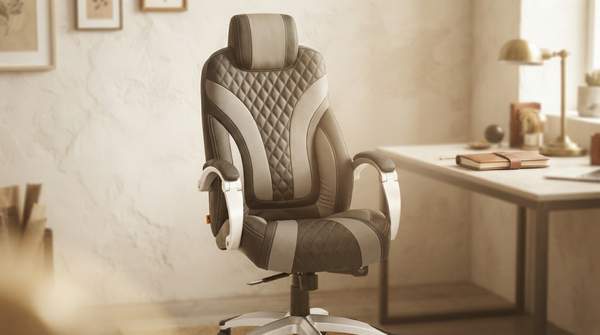
The best home office chair isn't a single model—it's the category that matches your body and your daily work pattern. If you do straightforward desk work and run warm, a task or mesh chair is usually the safer long-term pick. If a formal look matters and you've verified the fit, an executive chair can work well. If you sit through long, immersive sessions and want a headrest plus adjustable lumbar support, a gaming chair deserves a look. This guide compares those three categories on features, fit, and trade-offs, then walks you through matching one to your own routine.
Two boundaries up front: this article compares general categories, not specific makes or models, and it skips highly specialized seating like kneeling chairs, saddle chairs, and drafting stools. Prices are also left out—they vary widely and date quickly. The focus here is features and fit.
Understanding Ergonomic Essentials: Beyond Basic Comfort
Every good chair, regardless of category, starts with the same adjustment vocabulary. Ergonomic seating retailers consistently point to the same core controls: seat height and depth, lumbar support, adjustable arms, and back position. With those, you can fine-tune the chair to your body rather than forcing your body to adapt to the chair.
Herman Miller's buying guidance frames it by use case: for enduring comfort over long hours, look for total spinal support, adjustable arms, adjustable seat depth, breathable textiles, and responsive tilt. For short-term use in collaborative spaces, lumbar support, adjustable height, and swiveling bases matter more. The tilt matters because a chair should move with the task and let you change posture without losing support.
These basics matter more than branding. As Sit Healthier puts it, a chair marketed to executives can fit a broad-shouldered manager poorly, while a plain-looking ergonomic model can fit a petite accountant or a tall analyst far better if the adjustment ranges are right. Initial comfort can mislead: a plush seat that feels great for twenty minutes can feel wrong at hour six.
Task/Mesh Chairs: Versatility and Breathability
Task and mesh chairs are the workhorses of the category. They typically offer seat height, armrest height, tilt, and basic lumbar support, with mesh backs providing breathability. Adjustability varies significantly between models—some are basic, others offer advanced fine-tuning—so the category label alone doesn't tell you everything.
Where they shine is simplicity and airflow. Sit Healthier recommends a task chair when your priority is simplicity and space efficiency, and a mesh chair if you sit for long stretches, run warm, or want a lighter-feeling backrest. The mesh back is particularly beneficial for people who tend to run warm over a long workday.
For many people, mesh or ergonomic task designs are the safer long-term pick, because they usually make it easier to fit the chair to the body instead of the reverse. TechRadar's roundup reflects this: several of its top-rated office chairs for focused work are highly adjustable task-style models with 4D armrests and long warranties. Mid-back office chairs, which often include task and mesh designs, are generally recommended for up to eight hours of daily use—though that's a general guideline, and individual comfort may allow more or less.