A small kitchen rarely needs more square footage—it needs the right category of organizer aimed at the right zone. The solutions fall into a handful of families based on where they work: your countertop, your walls, your cabinets, and your freezer or pantry. If your counters are cluttered, one category applies; if you can't reach the back of a cabinet, another does. Here is how to diagnose your pain point and choose the organizer family that answers it, based on what editors and testers at Good Housekeeping, Wirecutter, and The Kitchn have reported.
Maximizing Countertop and Vertical Space
When counter space is the problem, the fix usually involves going up rather than out. A countertop organizer or appliance stand stacks items vertically, so one square foot of counter holds two or three tiers of storage instead of one. Good Housekeeping's Eva Bleyer highlights a multi-level appliance stand with a drawer and pull-out shelf as suited to kitchens with limited space, using it for extra utensils and measuring cups. Some countertop pieces require simple assembly, but they stay freestanding—no permanent installation, and you can move them when your needs change.
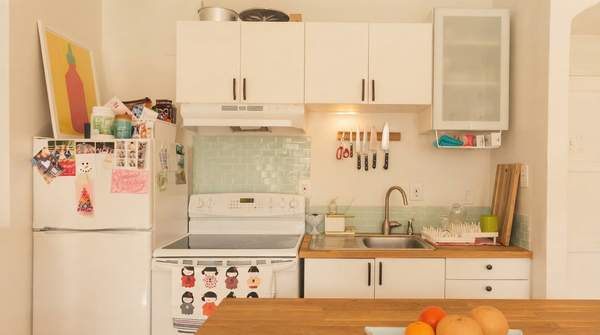
Walls are the other underused surface. A wall rack turns empty vertical space near your stove or prep area into storage, and The Kitchn's Alyssa Longobucco lists it first among ideas for tiny kitchens. Magnetic knife strips work the same way, keeping bulky tools off counters and out of drawers. This category is particularly useful for kitchens with limited horizontal space, since it converts surfaces that otherwise hold nothing. The trade-off is installation: wall-mounted organizers typically require screws or strong adhesive, so how permanent you want the change should factor in before you drill.
There are also low-commitment ways to add counter space itself. One small-space approach profiled by The Kitchn involves placing a cutting board over half the sink, creating extra prep surface while still leaving the sink accessible for rinsing. Wirecutter's testing, meanwhile, found magnetic shelves and risers to be the best fits for tight spaces.
Transforming Cabinet and Drawer Accessibility
If your problem isn't storage volume but reach—items migrating to the back of deep cabinets and never resurfacing—the solution category is accessibility organizers. Lazy Susans are the classic example, and The Kitchn calls them especially valuable in tight cabinets, since they let you rotate items into view rather than digging for them. A two-level version effectively doubles the usable shelf within the same cabinet footprint.
Drawer organizers sort the other common failure point. Bleyer advises against simply tossing silverware into a drawer, recommending a shallow organizer instead to keep items separated and visible. The constraint here is fit: a drawer organizer only helps if it matches your drawer's dimensions, so measure before buying.
Wirecutter's testing adds a cautionary note worth remembering when you shop: some stacking under-sink cabinet organizers can tip forward when the drawer is fully extended, particularly if heavier items sit on top. Accessibility hardware helps only if it functions reliably under load, so weight capacity matters as much as shelf count in this category.
Optimizing Pantry and Freezer Organization
Deep storage areas fail in a distinct way: things disappear. Freezer bins address the "frozen foods going missing in the depths of the freezer" problem that Good Housekeeping's Home Care & Cleaning Lab Executive Director Carolyn Forté recommends them for. Bins with handles make the difference when a load is heavy—Contributing Writer and Analyst Jamie Ueda swears by them in her home kitchen, according to the publication's writeup.
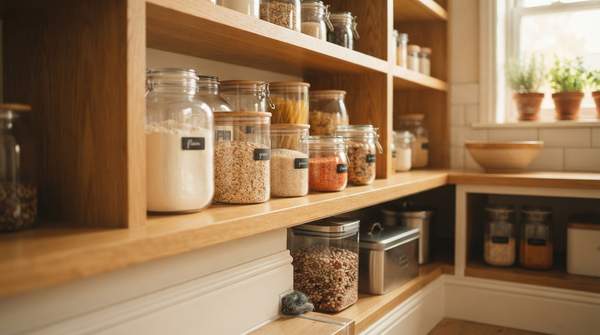
The same compartmentalizing logic applies to pantries. Good Housekeeping notes freezer bins can also store anything that comes in a pouch in the pantry, grouping slippery, stackable-unfriendly items into manageable units. Bins make deep interior space more efficient by dividing it into zones you can pull out in one motion, rather than shelves you excavate.
Organization in this zone also changes how you shop. Wirecutter quotes organizer Crandall's advice to "shop for perishable items in amounts that you will use"—which simultaneously saves space and cuts down on food waste. A bin system only works if the volume of food entering the freezer and pantry stays manageable.
Flexible and Portable Storage Solutions
Some kitchens have storage problems that move around, or renters who need solutions that can leave with them. Rolling carts are the answer in this category: The Kitchn lists utility carts among its small-kitchen storage ideas, and Wirecutter has tested specific models for tight quarters. A cart adds a mobile shelf unit that can serve as prep space overflow, pantry backup, or a coffee station, then tuck into a gap when not needed.
The appeal is adaptability. Unlike wall racks or pull-out cabinet hardware, a cart requires no installation and can change jobs weekly. The trade-off is floor space: a cart occupies ground that nothing else can use, so it suits kitchens with an odd sliver of open floor more than ones where every inch is already spoken for.
Comparison of Space-Saving Kitchen Organizer Categories
Use this table to match your specific storage problem to the right category. Find the row that describes your pain point, and note the installation commitment before you buy.
| Organizer Category | Problem Solved | Space Reclaimed | Typical Installation |
|---|---|---|---|
| Countertop organizers and stands | Cluttered counters; utensils and small tools piling up | Counter space, by using vertical height | Freestanding; some require simple assembly; over-the-sink cutting boards can add temporary counter space |
| Wall-mounted organizers (racks, magnetic strips) | Bulky tools and cookware consuming counter and drawer space | Wall space, converting unused vertical surfaces—especially valuable with limited horizontal space | Mounted with screws or strong adhesive; permanence varies by method |
| Accessibility organizers (Lazy Susans, drawer organizers) | Items unreachable in deep or tight cabinets; jumbled drawers | Usable interior cabinet and drawer space; two-tier Lazy Susans double shelf capacity | Freestanding inside the cabinet or drawer; must match your dimensions |
| Freezer and pantry bins | Food disappearing into deep freezer or pantry depths; pouch items sliding loose | Compartmentalized interior space, made more efficient and pull-out accessible | Freestanding; bins with handles help with heavy loads |
| Rolling carts | Storage needs that shift; no permanent changes possible | Gap floor space, converted to mobile storage | None—fully portable; requires an open floor slot |
Read the table as a diagnostic: "I can't reach the back of my cabinet" points to an accessibility organizer, while "my counters are unusable" points to countertop stands or wall racks. Each row also flags the installation effort, so you can rule out categories that exceed your commitment level—renters, for instance, can skip anything requiring screws.
Before You Buy: A Pre-Purchase Checklist
Answer these questions before spending anything:
- What are my primary storage needs? Pots and appliances call for wall racks or stands; dry goods and frozen food call for bins; mixed items call for carts.
- How do I actually use my kitchen daily? Items you reach for constantly should be accessible without bending or digging— Lazy Susans and countertop stands serve those; bins suit long-term stock.
- Do I need a temporary or permanent solution? Carts and freestanding organizers leave with you; wall-mounted racks and drilled hardware stay.
- What are the exact measurements of the target area? A drawer organizer or bin only works if it fits the drawer, shelf, or freezer floor it's meant for.
- How much weight will it hold? Wirecutter found some under-sink stackable organizers tip forward under load when fully extended—check capacity before trusting it with heavy items.
Making an Informed Decision for Your Small Kitchen
Before purchasing any kitchen organization product, homeowners should assess their specific storage needs, usage patterns, and the exact dimensions of the target area to ensure the chosen solution is effective and suitable. The right process is diagnosis first, category second, product last.
Here's the measurable indicator that you've done it right: a homeowner successfully identifies the correct category of organizer for their primary kitchen storage problem and has a clear understanding of the installation effort required. If you can point to your worst zone—counter, cabinet, wall, or freezer—and name the category that answers it, plus whether it needs a screwdriver or nothing at all, you're ready to shop the right aisle instead of guessing at products.
Sources
- 15 Clever Kitchen Organizers That'll Make You Feel Like You Did a Remodel — Good Housekeeping
- Small-Kitchen Organizers That Make the Most of Tight Quarters — Wirecutter: Reviews for the Real World
- The 36 Best Storage and Organization Ideas for Even the Tiniest Kitchens — Kitchn