This guide details the top six habits consistently organized individuals employ to maintain an efficient, stress-free kitchen. These practices are ranked by their impact on daily efficiency, ease of implementation, and long-term tidiness, offering actionable steps for anyone seeking to reduce clutter.
Organizing experts and publications informed the selection and ranking of these habits, which focus on creating lasting systems over temporary fixes.
1. Applying the 'Two-Foot Rule' — Best for Daily Countertop Clarity
The single most effective habit for preventing daily clutter buildup is practicing the 'Two-Foot Rule'. Organizing experts advocate for this simple method to maintain a clutter-free home, as reported by House Beautiful. The concept is straightforward: whenever you are in a high-traffic area like the kitchen, you actively clear a two-foot radius around you. This small, consistent action stops clutter before it has a chance to take over your precious counter space.
For counters that attract mail, keys, and school papers, this habit transforms the daunting task of clearing the entire kitchen into a five-minute daily ritual. It ranks above a weekly "deep clean" by focusing on prevention, eliminating visual stress from accumulating clutter, and making the kitchen instantly more usable.
Putting this into practice is easy. Start by identifying the primary work zone on your counter, usually between the sink and the stove. Commit to clearing just that two-foot area at the end of each day. Put the mail in its designated spot, hang keys on their hook, and return rogue items to their homes. The main drawback of this habit is its reliance on having an established organizational system. If your drawers and cabinets are already full, you'll find it difficult to put things away, making it essential to declutter your storage spaces first.
2. Maximizing Vertical Space with Risers — Best for Cabinet Efficiency
A core habit of organized people is thinking vertically, not just horizontally. Instead of stacking dishes and bowls into precarious towers, they use cabinet risers to create distinct levels of storage. According to the organization resource The Home Edit, risers can create more shelf space in cabinets, allowing you to store dishes or servingware as complete sets. This simple tool effectively doubles the usable surface area of a shelf.
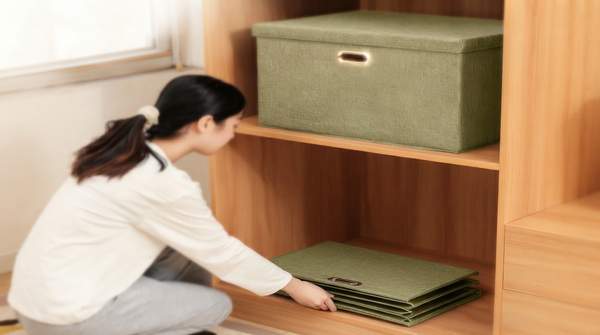
Separating dishes, mugs, and bowls onto different tiers improves visibility and accessibility, eliminating the need to unstack half the cabinet to find an item. This strategy is a game-changer for limited cabinet space, saving time and reducing the risk of chipping favorite plates.
To implement this, measure the height, width, and depth of your cabinets. Purchase risers that leave enough clearance for your items on both the top and bottom levels. Arrange your items by type—plates on the bottom, bowls on top, or everyday dishes on one level and guest dishes on another. A potential limitation is that fixed-height risers may not perfectly accommodate all of your items, potentially leaving some awkward, unused vertical space. Look for adjustable risers to get a more customized fit.
3. Using Turntables for Accessibility — Best for Awkward Corners
Deep, awkward corner cabinets are often where kitchen items go to be forgotten. The habit of using turntables, or Lazy Susans, transforms these frustrating spaces into highly functional storage. The Home Edit notes that turntables are particularly effective for storing and accessing spices, condiments, and cooking oils. A simple spin brings everything from the back of the cabinet to the front, ensuring nothing gets lost or expires in the dark.
For deep cabinets or pantries, a turntable provides 360-degree access, eliminating the need to knock over bottles or pull out entire bins to reach items. This tool is ideal for those tired of rummaging or with limited mobility, allowing a quick flick of the wrist to grab what's needed.
Start by measuring the footprint of your cabinet to ensure you buy a turntable that can spin freely. Group similar items together on each one—one for oils and vinegars, another for baking spices, and perhaps one in the refrigerator for jars of jam and mustard. The primary drawback is that turntables create unused space due to their circular shape in a square cabinet. However, the immense gain in accessibility and visibility often outweighs the minor loss of total storage volume.
4. Filing Cookware Vertically — Best for Heavy Item Access
Stacking heavy pots, pans, and baking sheets is a common kitchen practice, but it's also a major source of frustration. Organized individuals often adopt the habit of "filing" their cookware vertically instead. This approach, also recommended by The Home Edit, suggests using an expandable cookware organizer to store items upright, like files in a cabinet. This makes each individual piece easy to access without lifting the entire heavy stack.
Filing cookware eliminates the clatter and effort of digging out a single frying pan from the bottom of a stack. This method, especially beneficial for heavy cast-iron skillets or large collections of baking sheets, allows you to slide out any pan effortlessly, encouraging wider use of cookware and simplifying cleanup.
To get started, invest in a sturdy, adjustable cookware rack. Place it in a deep drawer or a low cabinet. Arrange your pans, lids, and baking sheets in the slots, with handles facing out for easy grabbing. The most significant limitation of this system is that it requires a cabinet or drawer with sufficient height to accommodate your largest pans standing on their sides. It may not be a viable solution for very shallow drawers or shelves.
5. Customizing Drawers with Inserts — Best for Utensil Order
To combat the "junk drawer" affliction, create a specific home for every item using individual drawer inserts. According to The Home Edit, these inserts, available in various sizes, allow for flexible, customized arrangement of silverware and cooking utensils, building a system that perfectly matches your inventory instead of a one-size-fits-all tray.
Instead of rummaging through tangled spatulas, whisks, and measuring spoons, create zones within your drawers where every item has a defined resting place. This approach, superior to a single, pre-molded tray, adapts to your collection, allowing custom compartments for items like corn cob holders or rolling pins.
Begin by emptying a drawer and measuring its interior dimensions. Then, purchase a set of modular, individual inserts. Arrange them like a puzzle to create compartments that fit your items snugly. Group like items together. The main drawback is that you can lose a small amount of space to the thickness of the dividers themselves, and it may take some trial and error to find the perfect configuration.
6. Taming Clutter with Stackable Storage — Best for Specialized Items
Dedicated, stackable storage solutions permanently solve the chaos created by awkwardly shaped water bottles, travel mugs, and food storage containers. The Home Edit suggests these organizers, often resembling small wine racks, keep bottles and lids together, maximize vertical cabinet space, and hold items horizontally and securely.
This solution is tailor-made for active families, fitness enthusiasts, or anyone with a growing collection of reusable beverage containers and mismatched food storage. It provides structure and containment, preventing bottles from falling over in cabinets and turning a jumbled mess into a neat collection.
To implement this, find stackable bottle organizers or dedicated bins for your containers. Designate a single cabinet for these items to create a "hydration station" or a "lunch-prep zone." One limitation is that these organizers are highly specialized. A water bottle rack won't work well for anything else, so you are committing that cabinet space to a single purpose. Be sure you have a large enough collection to justify the dedicated storage solution.
| Habit | Category/Type | Key Benefit | Best For |
|---|---|---|---|
| Applying the 'Two-Foot Rule' | Daily Maintenance | Prevents countertop clutter buildup | Busy households with high-traffic kitchens |
| Maximizing Vertical Space | Cabinet Organization | Doubles usable shelf space | Small kitchens or large dish collections |
| Using Turntables | Accessibility Solution | Makes items in deep cabinets easy to reach | Corner cabinets and pantries |
| Filing Cookware Vertically | Heavy Item Storage | Eliminates the need to unstack heavy pans | Organizing pots, pans, and baking sheets |
| Customizing Drawers | Utensil Organization | Creates a specific spot for every tool | Eliminating "junk drawers" |
| Using Stackable Storage | Specialized Organization | Contains awkwardly shaped items like bottles | Organizing water bottles and food containers |
How We Chose This List
The habits on this list were selected by evaluating advice from established home organization resources, including The Home Edit and House Beautiful, as well as publications like Apartment Therapy. We prioritized strategies that create sustainable, long-term organizational systems over one-time cleaning projects. The focus was on simple, actionable habits that require minimal investment but deliver a high impact on daily kitchen function and efficiency. We excluded tips that required major renovations, custom cabinetry, or significant expense, ensuring these solutions are accessible to everyone.
The Bottom Line
Apply the 'Two-Foot Rule' for immediate daily tidiness, keeping kitchen counters clear. For a foundational change that ensures long-term functionality, implement vertical storage solutions such as cookware filers and cabinet risers. These small, consistent habits, not massive overhauls, are key to an organized kitchen.