Most household leaks come down to two culprits: a worn toilet flapper or a dripping faucet. Both are, in many cases, repairs a homeowner can handle with a few basic tools and inexpensive hardware. The U.S. Environmental Protection Agency notes that these leaks "are often easy to fix, requiring only a few tools and hardware that can pay for themselves in water savings." The trick is diagnosing the source correctly, then knowing when a repair is beyond your comfort zone. This guide walks you through both.
Understanding Common Household Leaks: Toilets and Faucets
Toilets and faucets are the most common sources of household water waste, and their leaks are often silent or easy to overlook. A faucet that drips from the spout is obvious — you can see and hear it — but a leaking toilet can run quietly for months, sending water down the drain without a trace on your floor.
To confirm you have a leak somewhere before hunting for it, the EPA suggests a usage check: look at your winter water bill, and if a family of four exceeds 12,000 gallons in a month, there could be serious leaks. That kind of number is your cue to start looking at fixtures, beginning with the two most likely suspects.
Diagnosing a Leaky Toilet: The Flapper Test
The flapper is the rubber seal at the bottom of the toilet tank. When it wears out, water seeps from the tank into the bowl between flushes. You may notice the tank refilling on its own, but the only reliable way to confirm the diagnosis is a simple dye test.
First District Water, a utility district, describes the method: put food coloring in the toilet tank, then wait without flushing. If the color seeps into the bowl, the flapper valve is faulty and should be replaced. The test takes just a few minutes and a bottle of food coloring, and it distinguishes a flapper problem from other issues — such as moisture around the toilet's base, which points elsewhere.
DIY Fix: Replacing a Faulty Toilet Flapper
If the dye test confirms a bad flapper, the repair is inexpensive and beginner-friendly. Turn off the water supply valve behind the toilet, flush to drain the tank, and unclip or unscrew the old flapper from its hinges. Take it to a hardware store to match an exact replacement — flappers vary by toilet model — then install the new one, reconnect the chain with a little slack, and turn the water back on.
The Las Vegas Valley Water District, which publishes its own leak-repair guidance, puts it plainly: "If you find a simple leak like your toilet flapper or kitchen faucet, you can likely fix the problem yourself." The parts cost only a few dollars, and the repair pays for itself in water savings.
Identifying and Fixing a Dripping Faucet
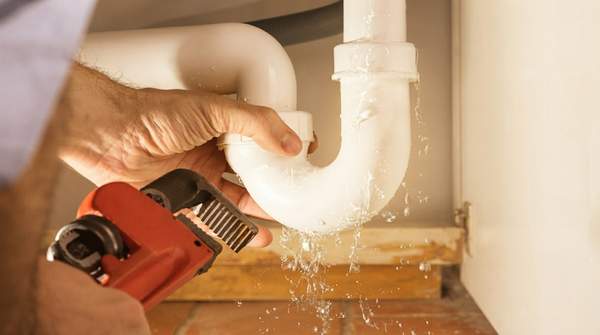
A visible drip from the spout is usually caused by worn internal seals. According to plumbing contractor Chesapeake Plumbing, common causes include "worn-out O-rings, degraded washers, or corroded valve seats." One plumber's caution is worth repeating: a single dripping faucet can waste thousands of gallons of water annually, so it's worth fixing promptly rather than tolerating.
For a compression faucet, a faucet-washer supplier explains that a drip "almost always means one thing: the flat rubber washer at the bottom of the valve stem has worn out," and that replacing it costs a few dollars and takes about ten minutes. Shut off the supply valves under the sink, plug the drain so small parts can't escape, then disassemble the handle and stem, swap the worn washer or O-ring for an exact match, and reassemble. Kohler, which publishes DIY faucet-repair instructions, emphasizes gathering your tools first — typically an adjustable wrench and a screwdriver. Also check the base of the handle for pooling water while the faucet runs; a leak there is a different problem than a spout drip.
Decision Framework: DIY Leak Fix or Call a Pro?
The matrix below classifies common toilet and faucet leak symptoms by location, then maps each to a specific action — a DIY repair when the fix is established and simple, a professional when it is not.
| Leak type | Observable symptom | DIY diagnostic step | DIY repair action | When to call a pro |
|---|---|---|---|---|
| Running toilet | Water enters the bowl without flushing; tank refills on its own | Food-coloring test in tank; color seeping into the bowl confirms a faulty flapper | Shut off supply, drain tank, replace the flapper with a matched part | Dye test is negative but the toilet still runs |
| Dripping faucet (spout) | Visible, audible drip from the spout | Confirm the drip occurs with handles fully off | Replace the worn washer or O-ring with an exact match | A washer or O-ring replacement fails to stop the drip, suggesting a corroded valve seat or worn fixture |
| Faucet handle base | Pooling water on the countertop while water runs | Run water and inspect the handle base | Try replacing O-rings under the handle | Persistent pooling after simple seal replacement |
| Hidden or other leaks | Moist spots around or under house plumbing, indoors or outdoors | Visual inspection of accessible plumbing | Not recommended — source is usually inaccessible | Any leak you cannot find or reach |
The pattern across the matrix: if you can see the symptom, match it to a cheap part, and reach it safely, it's a DIY job. If the symptom persists after the standard fix, or the water is somewhere it shouldn't be, escalate.
When to Call a Professional Plumber
Every source converges on the same boundary. First District Water warns that leaks you can't reach — besides wasting water — "can also damage floors, walls and ceilings." The EPA's advice is simply that if you cannot find or fix a leak, contact a plumbing professional. And Chesapeake Plumbing notes that if a simple washer replacement fails to resolve a dripping faucet, it's time for expert service to restore a watertight seal.
This guide deliberately stops at fixture-level repairs. It does not cover replacing pipes, repairing main service lines, fixing leaks inside walls, or appliance-specific procedures for washing machines, dishwashers, and water heaters — those are professional territory. And before any repair you do attempt, shut off the water supply first; safety precautions are your responsibility.
Your Next Step: Confidently Addressing Household Leaks
You can confidently handle the two most common household leaks — a faulty toilet flapper and a dripping faucet — using the dye test and washer replacement described above, but you should promptly contact a professional plumber for any leak that is hidden, persistent, or beyond your comfort level, to prevent significant water damage and waste. Your measure of success: the absence of visible drips or running-water sounds after your DIY repair — or, for anything unresolved, a scheduled appointment with a licensed plumber.
Sources
- Fix a Leak Week — US EPA
- Easy Ways to Find and Fix Leaks — Firstdistrictwater
- Find and fix leaks in your home — LVVWD
- 8 Common Household Leaks and How to Spot Them — Chesapeakeplumbing
- How to Change a Faucet Washer in 5 Steps (Stop a Drip) — Rubber Washer Warehouse
- How to Fix a Leaky Sink Faucet — KOHLER