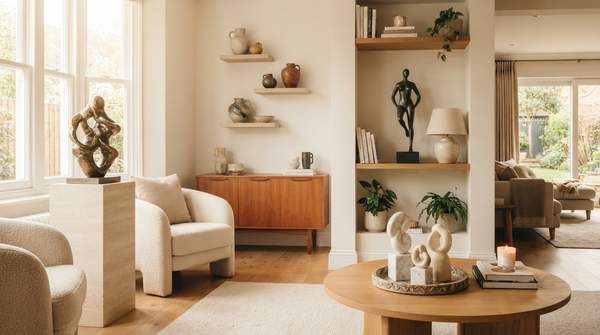
A recent Home & Hearth Institute survey reveals a significant shift: 65% of homeowners under 40 now actively seek distinct, intimate zones in their living spaces. The 65% shift marks a stark reversal from the open-concept craze of the past two decades, signaling a profound turn in modern interior design. Younger homeowners are prioritizing privacy and focused activities over expansive, undifferentiated areas.
For decades, open-plan living promised connection and spaciousness, becoming the aspirational standard. Yet, a growing number of homeowners now actively partition their spaces, recreating the distinct, conversation-focused layouts of the 1950s. The active partitioning of spaces by homeowners creates a clear tension between current housing supply and evolving consumer demand.
The ubiquitous open-plan living space appears to be waning, replaced by a renewed appreciation for intentional zoning and intimate domestic environments. Interior design firm 'Zoned Living' reported a 300% increase in requests for room dividers and partial walls in 2023 compared to 2019, according to their Annual Report. Even Architectural Digest featured 'The Return of the Formal Living Room' as its top trend for Q1 2024, confirming a definitive shift from purely casual layouts.
Why Open-Plan Living Is Losing Appeal
Once the standard, with over 70% of new North American homes featuring open-concept layouts from 1990 to 2010 (National Association of Home Builders), the appeal of open-plan living has diminished.
The University of California, Berkeley, found residents in these homes reported 25% higher noise-related stress, a significant functional drawback. Post-2020, the surge in remote work further exposed these limitations. The Gallup Work From Home Study revealed a critical need for dedicated, quiet spaces, a need open plans often fail to meet. Parenting Today Magazine notes parents in open-plan homes struggle to supervise children's activities while working or relaxing.
Noise-related stress, the need for quiet spaces, and supervision struggles, amplified by evolving work habits, highlight a growing disconnect: while new constructions still push open layouts, consumer preference now demands more practical, private alternatives.