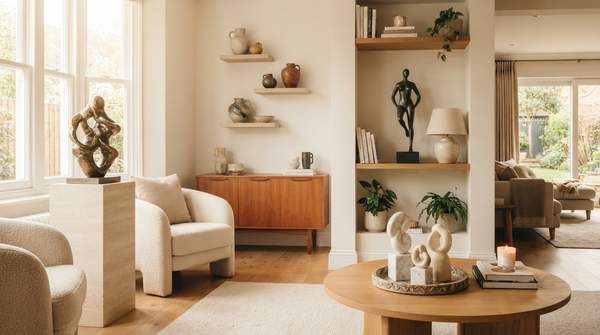
Sculptural art can transform a room, turning an ordinary corner into a captivating showpiece and lending a unique story to your space. But the impact of a three-dimensional piece often depends on more than the object itself; strategic placement can elevate it from a simple possession to the centerpiece that ties your entire room together. Moving beyond placing an object on the nearest flat surface, a few intentional display techniques can dramatically multiply its effect.
Whether you have a single statement piece or a growing collection, the right approach can create a focal point, craft a cohesive narrative, or simply add a layer of character and interest to your home. From dedicated stands that command attention to subtle integrations on existing furniture, these methods help you showcase your art in a way that feels both personal and professionally curated. Before choosing a method, it's helpful to consider what the space can safely support and how the sculpture is best viewed.
Elevate with Pedestals and Plinths
One of the most classic and effective ways to display a sculpture is on a pedestal or plinth. This technique physically and visually lifts the artwork, separating it from the everyday clutter of a room and signaling its importance. According to Colorado Art Services, a professional art services company, using a pedestal naturally creates a focal point and improves the viewing height, allowing the piece to be appreciated without distraction. This method is particularly effective in home entries, corporate lobbies, and galleries.
When selecting a stand, ensure it is sturdy enough to support the artwork's weight and sized appropriately for the room to avoid overwhelming the space. For sculptures that are heavy or have an irregular shape, a custom-built stand can provide better stability and safety. By giving a sculpture its own dedicated space, you invite viewers to engage with it more formally, appreciating its form and texture from multiple angles.
Crafting Themed Vignettes and Groupings
Another powerful strategy is to create a themed display that groups a sculpture with other objects. This approach transforms a collection of individual items into a curated narrative, telling a visual story that captivates the viewer. According to guidance from Art-Online, a well-conceived thematic arrangement allows sculptures to communicate beyond their individual forms, creating a unified artistic experience. This prevents your decor from feeling like a random assortment of objects and instead weaves a cohesive thread through your space.
You can build a vignette on a console table, a bookshelf, or a mantelpiece. The key is to select objects that share a common element—perhaps a similar color palette, material, or historical period. For example, a modern abstract sculpture could be paired with minimalist ceramics and a stack of art books. This method allows you to integrate art with furniture and other homewares, creating connections that echo a pattern, color, or shape found elsewhere in the room.
Integrating Art on Existing Surfaces
You don’t always need a dedicated stand to make an impact. Integrating sculptures into your existing furniture is a flexible and accessible way to add character to a room without taking up extra floor space. Surfaces like bookshelves, side tables, and mantelpieces are ideal locations for displaying art, especially smaller pieces that might get lost on their own. A publication from David Harber, a maker of outdoor sculptures and art, suggests that a mantelpiece, bookshelf, or even a fireplace can benefit from sculptural embellishment.
This approach offers a more casual, lived-in feel. You can lean smaller, lightweight pieces against a wall on a ledge or place them on stacks of books for an informal look. This method is highly flexible, as the pieces don't need to be permanently anchored and can be moved easily when you want to refresh your decor. It’s an excellent way to fill empty spots and add points of interest throughout a room.
Dynamic Wall-Mounted Sculptures
For those with limited floor space, mounting sculptures directly on the wall is a dramatic and efficient solution. This technique turns an empty wall into a dynamic feature and is particularly effective for relief sculptures or other three-dimensional works designed for vertical display. According to Colorado Art Services, wall-mounted sculptures can create a striking visual statement in modern homes and small offices.
This method can also be used to build upon an existing collection of prints and paintings, adding texture and depth to a gallery wall. Metal sculptures with reflective surfaces are especially effective, as they play with light and shadow, which can help make a room feel larger. When mounting any piece, especially a heavy one, it is crucial to use hardware specifically designed for your wall material and the sculpture’s weight. For valuable or heavy art, professional installation is recommended to ensure long-term safety.
Sculpture Display Decision Framework
Choosing the right display method depends on your specific artwork, your room's layout, and your overall design goal. This framework can help you match your piece and your intention to the most suitable strategy, ensuring your sculpture is presented to its best advantage.
| Display Goal | Best for Sculpture Type | Space Requirement | Recommended Method |
|---|---|---|---|
| Create a strong focal point | Medium to large, standalone pieces | Dedicated floor space, often in an entryway or corner | Pedestal or Plinth |
| Tell a story or build a theme | Small to medium pieces, or a collection of related items | Tabletop, console, or bookshelf surface | Themed Vignette |
| Integrate art into daily life | Smaller, lightweight sculptures and objects | Existing surfaces like mantelpieces, side tables, and ledges | Integration on Existing Surfaces |
| Save floor space and add drama | Relief sculptures, lightweight 3D forms, or metalwork | An empty wall or as part of a gallery wall | Wall-Mounting |
Making Your Art Collection Dynamic
Homeowners should periodically rotate or re-position their sculptural art to maintain visual freshness and re-engage with their collection. Just as public galleries re-hang their collections, a similar practice at home can be hugely rewarding. According to Adam Art Advisory, a "re-hang of artworks every few years" can be refreshing. This doesn't have to be a major overhaul; simply moving a piece to a new location can fundamentally alter your perspective on it.
Changing displays seasonally can also breathe new life into your home, creating an ever-changing visual narrative that reflects the time of year. This practice keeps your environment feeling vibrant and engaging. The ultimate goal is to foster a dynamic relationship with your art, allowing for a noticeable shift in the room's aesthetic or a renewed appreciation for previously displayed pieces. Sometimes, all it takes is a new position to completely change your point of view.





