Excavators are among the most adaptable machines on construction and demolition sites, largely because different attachments allow them to perform specialized tasks. For contractors involved in structural removal, concrete processing, and material recovery, choosing the right excavator attachment can influence how effectively a project is completed.
Three important equipment categories are hydraulic hammers, concrete pulverizers, and demolition shears. Although all three are associated with demolition work, they perform different functions. Understanding those differences helps contractors avoid purchasing an attachment that does not suit their operational requirements.
EFI Demolition Equipment offers access to demolition attachments and heavy equipment that contractors can evaluate when planning their next machinery investment.
Hydraulic Hammers: Breaking Hard Materials
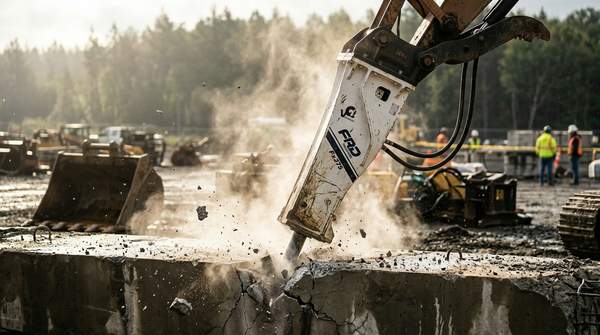
Hydraulic hammers, also known as hydraulic breakers, are designed to deliver repeated impact force to hard surfaces. They are commonly considered for concrete breaking, foundation removal, rock excavation, and other applications involving material that needs to be fractured.
The attachment uses hydraulic energy supplied by the excavator to operate an internal striking mechanism. This produces repeated blows through a working tool, allowing the operator to break material in a controlled manner.
For demolition contractors, hydraulic hammers can be useful when removing concrete slabs, breaking foundations, or carrying out selective demolition. They may also be considered for construction applications involving rock or other hard ground conditions.
Selecting the right hydraulic hammer requires attention to the excavator's operating weight, hydraulic flow, pressure requirements, and attachment specifications. The working tool must also be appropriate for the material and application.
Contractors should avoid choosing a hydraulic breaker based solely on its physical size. A model that is too heavy or has incompatible hydraulic requirements may not be suitable for the excavator. Reviewing the manufacturer's specifications is essential before purchase and operation.
Concrete Pulverizers: Crushing and Processing Demolished Concrete
Concrete pulverizers serve a different purpose. Rather than relying primarily on repeated impact, these attachments use crushing action to break concrete into smaller pieces.
They are particularly relevant to demolition projects involving concrete structures and reinforced concrete. Depending on the attachment design, pulverizers can help reduce material size and separate concrete from reinforcing steel.
This makes them worth evaluating when a contractor needs to process demolished concrete rather than simply fracture it. For example, a project involving the removal of concrete structural elements may require equipment that can crush material into more manageable pieces for subsequent handling.
Different pulverizer designs are intended for different operating conditions. Buyers should examine jaw configuration, opening dimensions, crushing force specifications, and compatibility with the excavator.
The presence of reinforcing steel also matters. Contractors should confirm that the selected model is appropriate for the type and thickness of reinforcement involved rather than assuming every pulverizer performs identically.
A properly matched pulverizer can become a useful part of a material-processing strategy, particularly when concrete reduction is a recurring requirement.
Demolition Shears: Cutting Steel and Other Materials
Demolition shears are designed for cutting applications. Their jaws use mechanical force to cut compatible materials, making them particularly useful for structural steel processing and metal demolition.
Contractors working with industrial structures, metal frameworks, and scrap processing may find hydraulic shears relevant to their operations. The equipment can help break down suitable metal components into manageable sections for handling and further processing.
However, shear selection should be based on the material being cut and the attachment's rated capabilities. Different designs may be intended for different types of steel, structural profiles, or processing environments.
Buyers should examine cutting specifications, jaw geometry, excavator compatibility, and the manufacturer's operating guidance. The attachment's physical dimensions and weight also influence whether it is appropriate for the intended machine.
Choosing a shear simply because it appears heavy-duty is not a reliable purchasing method. The correct model must match the actual cutting requirements.
Understanding the Differences
Although these attachments are all used in demolition, their functions are not interchangeable.
A hydraulic hammer is primarily intended to fracture hard materials through repeated impact. A concrete pulverizer crushes and processes concrete. A demolition shear cuts suitable metal materials.
Consider a project involving the removal of an industrial building. Concrete foundations and slabs may require a hydraulic breaker. Reinforced concrete sections may be processed with an appropriate pulverizer. Structural steel components may call for a demolition shear.
The equipment combination depends on the building's materials, demolition sequence, excavator fleet, and project specifications.
Contractors should also consider whether an attachment will serve one specialized project or become part of their regular equipment inventory. A frequently used attachment may justify a different investment approach from equipment required for occasional work.
Compatibility Matters as Much as Attachment Type
Identifying the correct attachment category is only the beginning. The selected model must also work with the excavator.
Hydraulic flow and pressure are among the most important specifications for powered attachments. The excavator must be capable of supplying the hydraulic performance required by the attachment.
Mounting dimensions, pin measurements, operating weight, and hydraulic connections must also be checked. These details determine whether the equipment can be installed and operated appropriately.
EFI Demolition Equipment provides custom mounts and pins through its fabrication capabilities. This can help address certain fitting requirements when buyers need a particular attachment configured for their machine.
Contractors should provide the excavator make, model, and relevant specifications when discussing compatibility. They should also confirm the final configuration before purchasing.
Consider New and Used Attachment Options
Budget and availability influence equipment decisions. New attachments may appeal to buyers who want equipment in new condition, while used machinery can provide additional purchasing opportunities.
In either case, the attachment should be evaluated according to its intended application. For used hydraulic hammers, inspect the housing, working tool, hydraulic connections, and areas exposed to repeated impact.
For pulverizers and shears, pay particular attention to jaw wear, structural condition, moving components, hydraulic cylinders, and visible damage. Request available service information and an inspection where possible.
An attractive price is not enough if the attachment requires substantial repairs or does not match the excavator.
Find the Attachment That Matches Your Work
Hydraulic hammers, concrete pulverizers, and demolition shears each address distinct demolition requirements. Understanding their functions helps contractors narrow their equipment choices and make more informed purchasing decisions.
EFI Demolition Equipment offers demolition attachments and equipment options, along with custom mounting solutions and equipment sourcing assistance. Contractors can explore the available inventory and discuss their machine specifications and project requirements when evaluating their next attachment purchase.