For an 8-foot ceiling, getting recessed lighting right means placing fixtures exactly 4 feet apart, a detail often missed that can make or break a room's illumination. This precise spacing ensures uniform illumination, preventing dark spots and harsh shadows. Understanding and applying these guidelines, alongside leveraging smart lighting technology, is crucial for creating truly functional and aesthetically pleasing home environments.
Many homeowners install lighting fixtures based on intuition, but optimal illumination relies on specific, measurable distances and advanced bulb features. This common approach often leads to uneven light distribution, rendering even advanced smart bulbs largely ineffective. Investing in premium smart bulbs like the WiZ 60W A19 is a waste if precise fixture placement rules aren't followed; optimal illumination is fundamentally a geometry problem, not just a technology upgrade.
Understanding Recessed Lighting Placement
For an 8-foot ceiling, recessed lighting fixtures should be spaced 4 feet apart, according to Amicolight. This fundamental rule means effective lighting design begins with exact measurements, not guesswork, to achieve uniform illumination. A balanced glow depends on strategic distribution, not just the number of lights. Without this precise spacing, even powerful light sources can leave areas feeling dim or overexposed, creating unwanted 'spotlighting' where some areas are bright and others shadowed. Consistent, comfortable light reaches every corner with this attention to detail.
Beyond Basic Illumination: Why Precision Matters
The first recessed lighting fixture from a wall should be half the spacing distance from the wall, as detailed by Amicolight. This subtle detail prevents perimeter shadows and ensures balanced light. Ignoring it creates a 'cave effect,' making walls appear dark despite overhead lighting. Optimal illumination demands thoughtful design beyond simple installation. Even advanced smart bulbs, like the WiZ 60W A19, cannot compensate for poor fixture placement; a perfectly spaced 4-foot grid is essential for truly optimal smart illumination. This technical challenge means most DIY attempts are inherently suboptimal, regardless of the technology involved.
Calculating Your Lighting Layout
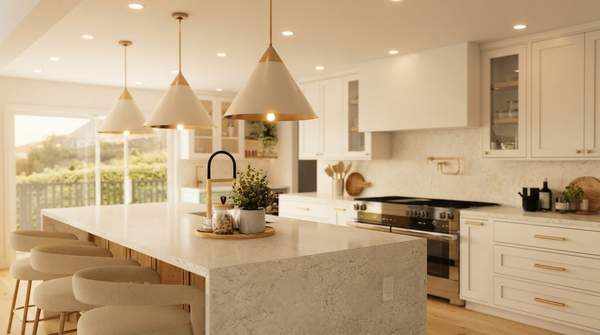
For a 12x16 room with an 8-foot ceiling and 4-foot spacing, approximately 12 fixtures are needed, according to Amicolight. This calculation shows how precise spacing translates into a concrete number of fixtures for adequate coverage. Such planning avoids over-lighting or under-lighting, ensuring every part of the room receives sufficient light, enhancing both functionality and ambiance. This systematic approach saves time and resources, preventing costly adjustments after installation.
Modern Fixture Innovations
Amico's ultra-thin recessed lighting design fits into 2-inch clearance spaces, showcasing how modern fixtures overcome common installation challenges. This innovation offers homeowners greater flexibility, making recessed lighting viable even in ceilings with limited overhead room and simplifying physical installation. Yet, despite these advancements, persistent ignorance of basic spatial design principles means most residential lighting setups will remain functionally dim or uneven, regardless of how 'smart' their bulbs are.
The Power of Adjustable Light
Many modern lights offer selectable color temperatures, ranging from 2700K to 5000K, allowing significant customization. This ability lets homeowners tailor lighting to specific activities or desired ambiance, enhancing a room's versatility. A warmer light (lower Kelvin) creates a cozy atmosphere, while a cooler light (higher Kelvin) suits task-oriented work. Customizing your light's warmth or coolness transforms a room's mood instantly, adapting from an invigorating morning setting to a relaxing evening glow. It empowers you to control your home's feeling with a simple adjustment.
Top Smart Bulbs for Every Need
The WiZ 60W A19 Color LED stands out as a top smart bulb, praised by The New York Times for its strong lux readings, wide color temperature range, robust app features, and competitive price. It offers a versatile solution for general home illumination, easily adjusting brightness and color for any occasion. For task lighting, the GE Cync Full Color Direct Connect Smart Bulb excels with impressive lux scores, ideal for offices or detailed work, as noted by The New York Times. Its focused illumination helps reduce eye strain. For smart home integration, the Meross MSL120 Smart Wi-Fi LED Bulb provides consistent lux measurements and directly supports Apple Home control, eliminating the need for its own app. These diverse capabilities highlight how leading smart bulbs cater to specific needs, from general ambiance to focused tasks or seamless smart home integration. Choosing the right smart bulb enhances daily living, ensuring your lighting system works harmoniously with your lifestyle.
Common Lighting Questions Answered
What are the different types of light bulbs for home lighting?
Beyond smart LEDs, traditional options include incandescent, halogen, and compact fluorescent (CFL) bulbs. Incandescent bulbs provide a warm glow but are inefficient, while halogens offer brighter, whiter light. CFLs are energy-efficient but contain mercury and have a slower warm-up time compared to instant-on LEDs.
How do I choose the right light fixture for each room?
Selecting the right fixture involves considering the room's function and ceiling height. Pendant lights work well over kitchen islands or dining tables, providing focused task lighting. Flush-mount or semi-flush-mount fixtures are ideal for rooms with lower ceilings, offering ambient light without impeding head clearance.
What are the latest trends in home lighting fixtures for 2026?
For 2026, trends include minimalist designs, often integrated into architectural elements, and an increased focus on human-centric lighting that adjusts color temperature and brightness to mimic natural daylight cycles. Voice-controlled lighting systems are also gaining popularity, offering seamless integration with smart home ecosystems.
Looking ahead, truly transformative home lighting will likely emerge from a blend of meticulous spatial planning and the thoughtful integration of advanced, adaptable smart lighting technologies, crafting environments that are both beautiful and profoundly functional.