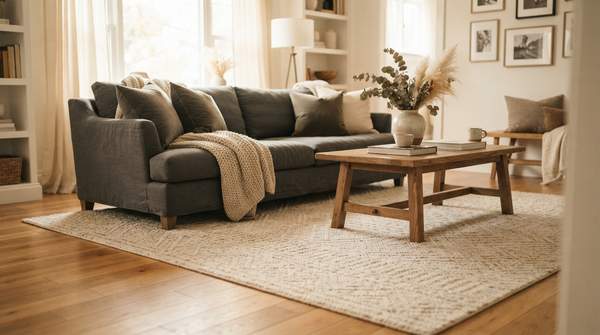
The two decisions that matter most when buying an area rug are what it is made of and how big it is. Get the material right, and the rug will stand up to your household's traffic and cleaning routine; get the size right, and it will visually anchor your furniture instead of floating awkwardly in the middle of the floor. Based on guidance from rug retailers and buying guides, the short version is this: wool offers the best balance of softness, durability, and natural stain resistance for bedrooms and living rooms, while polypropylene is the practical pick for dining rooms, kitchens, bathrooms, and homes with kids or pets. For sizing, your furniture—not your room's wall-to-wall dimensions—determines the correct rug size.
Choosing Your Area Rug: Material Matters
Most rug-buying advice starts with foot traffic, and for good reason. Bedrooms and living rooms typically see less traffic and fewer spills than kitchens, bathrooms, and dining areas, which changes which fiber makes sense in each space. Sisal Rugs Direct puts it simply: a soft, comfy wool rug is a great option for bedrooms and living rooms, while a durable, easy-to-clean polypropylene rug is a better fit for the bathroom and kitchen, where water and other products may spill at any moment.
Wool earns its reputation as the versatile natural fiber. It is prized for durability and softness underfoot, and it is naturally stain-resistant, which makes day-to-day cleaning easier. RugKnots' comparison guide recommends wool specifically for bedrooms, where you want the softest, warmest material possible when you step out of bed in the morning, and notes that a wool rug can also provide the comfort and durability needed for a high-traffic lounging area. The main trade-off is price and care: specific cleaning methods vary by rug construction, so you should always follow the manufacturer's instructions for your particular rug.
Polypropylene, the most common synthetic rug fiber, is a petroleum-based plastic product engineered to mimic natural fibers. Its strengths are practical: it repels water-based spills, cleans up easily, and performs well wherever messes are likely. RugKnots is blunt about its weaknesses, though—a typical polypropylene rug lasts only three to five years before looking matted and worn, and while it repels water, it absorbs oils. An oil-based spill, or even natural oils from bare feet or pets, can leave a permanent dark spot. For dining rooms, where chairs slide constantly and food spills are inevitable, RugKnots still calls a cheap, easy-to-clean poly rug "the safer choice," alongside flatweave wool as an alternative.
One point of disagreement is worth noting. Some retail guidance positions wool for lower-traffic rooms and synthetics for high-traffic zones, while other comparisons emphasize wool's natural durability in busy areas. The practical reading is that wool is versatile enough for most rooms, including high-traffic ones, but polypropylene is the more forgiving and economical choice where you expect heavy wear, moisture, or frequent spills—and where replacing the rug in a few years is an acceptable outcome rather than a disappointment.