A successful lighting plan doesn't start with fixtures—it starts with layers. The most comfortable rooms combine three kinds of light: ambient light for general visibility, task light where you actually work, and accent light that highlights what you love about the space. Design guides from Sagebrook Home to Baseline's lighting philosophy essays converge on the same point: layering these three types of light, each on its own switch or dimmer, is what turns an ordinary room into one that is both functional and inviting. From there, your bulb choices come down to two numbers—Kelvin for warmth, lumens for brightness—and this guide walks you through both, room by room.
Understanding the Three Layers of Light
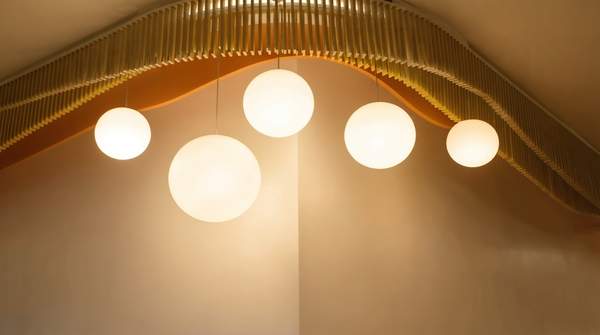
Ambient lighting is your base layer: the overall illumination that lets you move through a room safely and sets its mood. Think ceiling fixtures, flush mounts, and chandeliers—the light you'd flip on walking into a dark room. Without it, every other layer feels disconnected.
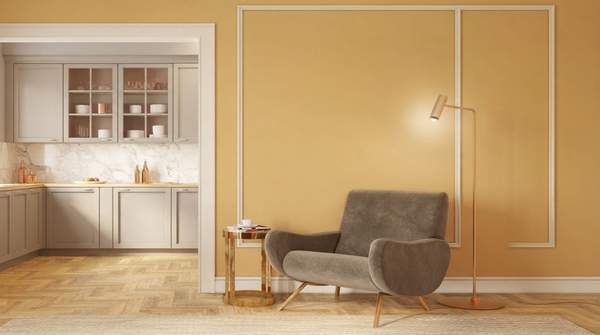
Task lighting is focused light aimed at a specific activity. As Sagebrook Home's design guide puts it, task lighting "focuses on specific areas for activities like reading or cooking." It's the reading lamp beside the armchair, the pendant over the kitchen island, or under-cabinet strips brightening a countertop where you chop vegetables.
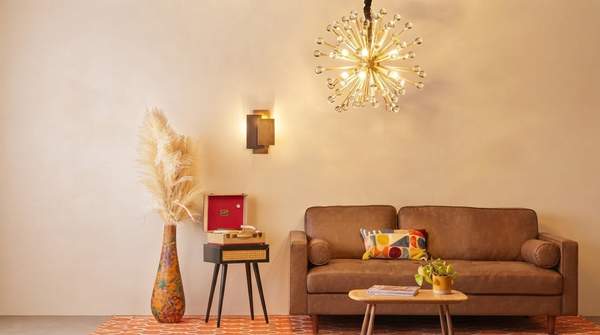
Accent lighting is the finishing touch: light used to highlight architectural features, artwork, or decorations. Wall sconces washing a textured plaster wall or a picture light over a painting both qualify. ArchiVinci's lighting guide offers a useful rule of thumb for balance: accent light only stands out when it is brighter than the light surrounding it. A common starting point is at least three light sources at different heights in a living space—a ceiling light, a floor lamp, and a table lamp or sconce—each on its own switch or dimmer.
Choosing the Right Fixtures for Each Layer
Each layer maps naturally onto certain hardware. For ambient light, ceiling fixtures do the heavy lifting: chandeliers and flush mounts work well for general lighting, according to Sagebrook Home, while recessed cans spread even, glare-free illumination across a ceiling. Eaton's lighting design guide notes that a well-designed scheme often combines recessed or surface downlights, wall-washer luminaires, and uplighters so that the task area is lit efficiently while walls and ceilings stay evenly illuminated for visual comfort.
Task lighting calls for fixtures positioned close to the work: table and floor lamps for reading corners, pendants hung over islands and sinks, and under-cabinet strips for counters. Accent lighting leans on wall sconces—great for creating visual interest, in Sagebrook's phrasing—plus picture lights and adjustable recessed fixtures aimed at art or shelving. Placement matters as much as type: Baseline's design philosophy guide suggests, for instance, that a living room's ambient light can come from ceiling fixtures, its task light from reading lamps, and its accent light from wall-mounted fixtures highlighting artwork.
Kelvin and Lumens: Setting the Mood and Brightness
Once your layers are placed, two numbers determine how each bulb actually performs. Kelvin (K) measures color temperature—how warm or cool the light appears. The warm-white range of 2700K–3000K creates a cozy, inviting atmosphere that design guides consistently recommend for living rooms and bedrooms. Neutral white at 3500K–4000K reads as crisp and functional, ideal for kitchens and bathrooms, while daylight-range bulbs above 5000K mimic natural light for detail-focused work.
Lumens measure brightness: how much usable light a bulb produces. As a rough framework from Post Digital Architecture's room-by-room standards, 1,000–2,000 lumens suits ambient lighting in many rooms, 3,000–4,000 lumens is appropriate for kitchens and bathrooms, and task-heavy areas can call for 5,000 lumens or more. These are general guidelines, not fixed rules—the same guide stresses that pairing the right Kelvin with the right lumens is what ensures both comfort and functionality, and actual needs shift with room size, ceiling height, wall colors, and personal preference.
Home Lighting Plan: Room-by-Room Recommendations
The table below synthesizes the recommendations from these design guides into a quick-reference plan you can use while shopping for fixtures and bulbs. Find the room and activity you're planning, then match your bulb choices to the listed color temperature and brightness range.
| Room / Area | Activity | Lighting Layer(s) | Recommended Kelvin (K) | Recommended Lumens (lm) |
|---|---|---|---|---|
| Living room | General / relaxing | Ambient, with task and accent layers added for adaptability | 2700K–3000K (warm white) | ~1,000–2,000 lm ambient as a starting point |
| Living room | Reading | Task lighting from a reading lamp | Warm white consistent with the room | Guide-based task range; specific reading lumen values vary |
| Kitchen | General / ambient | Ambient (overall visibility) | 3500K–4000K (neutral white) | 5,000–10,000 lm total; or ~30–40 lm per sq ft |
| Kitchen | Countertop prep, cooking | Task lighting over counters, sink, and cooktop | 3500K–4000K | 3,000–4,000 lm per work area |
| Kitchen | Depth and visual interest | Accent (under-cabinet, above-counter) | Consistent with kitchen scheme | 2,000–4,000 lm |
| Bedroom | General / relaxing | Ambient, warm and cozy | 2700K–3000K (warm white) | ~1,000–2,000 lm ambient as a starting point |
| Bathroom | Vanity / grooming | Task lighting at the mirror, bright and shadow-free | Neutral or cool white (3500K–4000K) | Strong, even, shadow-free light directed at the face |
Reading the table works like this: the Kelvin column keeps the mood consistent with the room's purpose, while the lumens column ensures each layer delivers enough light for its job. For kitchen ambient light, The Kitchen People's lumen breakdown offers a helpful cross-check: most kitchens perform well with about 30 to 40 lumens per square foot overall, so a 200-square-foot kitchen needs roughly 6,000 to 8,000 lumens of ambient light—and that total should come from several fixtures, not one.
Living Room: Warmth With Adaptability
Living rooms serve multiple functions, so Post Digital Architecture's standards note they benefit from layered lighting for adaptability. Start with warm-white ambient light at 2700K–3000K from ceiling fixtures, then add a floor lamp beside your main reading chair and a table lamp or sconce elsewhere in the room. Each source on its own switch or dimmer lets you shift from bright enough for a house full of guests to soft enough for a movie night.
Finish with a single accent source aimed at what you want people to notice—a piece of art, a bookshelf, or a textured wall. ArchiVinci's guide adds one refinement worth seeking when colors matter: lamps with a color rendering index (CRI) of 90 or more make paint colors, fabrics, and wood tones look true. Keep the whole scheme in one warm-white color temperature so the layers blend rather than compete.
Kitchen: Brightest Room in the House, by Design
The kitchen is where lighting does the most work, so its numbers run higher than anywhere else. City Lights SF's kitchen lighting guide recommends around 5,000 to 10,000 lumens of general illumination for a typical kitchen, with neutral white at 3500K–4000K keeping the space crisp and alert. The Kitchen People's per-square-foot figure—30 to 40 lumens per square foot—lets you tailor that total to your own room's size.
For task lighting over the specific work zones, City Lights SF recommends 3,000 to 4,000 lumens focused on countertops and prep areas, delivered by under-cabinet strips and pendants over the island and sink. PacLights' engineering guidance adds that a 10-by-12-foot kitchen, for example, may need around 3,600 lumens of ambient light, achievable through ceiling-mounted fixtures, recessed lights, or a combination—and that dimmable options let you adjust brightness by time of day and activity.
Bedroom and Bathroom: Cozy Meets Functional
Bedrooms follow the living room's logic at lower intensity: warm-white ambient light at 2700K–3000K keeps the environment cozy and inviting, with bedside lamps providing focused task light for reading. Because the room's job is rest, resist the urge to over-light it—start at the lower end of the ambient range and add rather than subtract.
Bathrooms shift gears. Happy Hiller's room-by-room guide stresses that the primary objectives there are safety, function, and aesthetics, and recommends bright, even, shadow-free light—recessed fixtures for a clean, glare-free look, with pendants or wall sconces above mirrors and sinks. The critical detail: make sure strong, neutral or cool light is directed toward your face as you stand in front of the mirror, since overhead-only light casts exactly the shadows that make grooming harder.
Designing Your Home Lighting: A Practical Approach
You can create an effective lighting plan without a designer by working through the same sequence the guides describe: assess each room's function and natural light, lay in ambient light at the room-appropriate Kelvin, add task light wherever an activity actually happens, then place one or two accent sources on the features worth showing off. Choose bulbs by matching the Kelvin and lumen values from the table above to each layer's job, and put each source on its own switch or dimmer so the layers can be balanced independently.
The measurable result to look for is a noticeable improvement in each room's functionality, comfort, and aesthetic appeal—adequate illumination for tasks, a pleasant ambient atmosphere, and highlighted features, without excessive glare or dark spots. That check is concrete: stand where you'll actually work and read, and see whether the light supports the activity without forcing you to squint or lean toward the lamp. If a room passes that test, your plan works, regardless of how many fixtures it took to get there.
Sources
- How to Optimize Lighting Design in Home for Functionality — Sagebrook Home
- #27 - A Guide On Lighting Philosophy in Interior Design - Baseline
- Lighting Design Guide: The Best Lighting for Every Room|ArchiVinci
- www.google.com
- Lighting Guide: Plan Lighting for Every Room Easily — Post Digital Architecture
- Thekitchenpeople
- Best Color Light for Kitchen: Expert Guide to Kitchen Lighting — City Lights SF
- Lumens In Kitchen: Explained, A Must-Know for Electrical Engineers — PacLights
- Room-by-Room Interior Lighting Guide — Happy Hiller