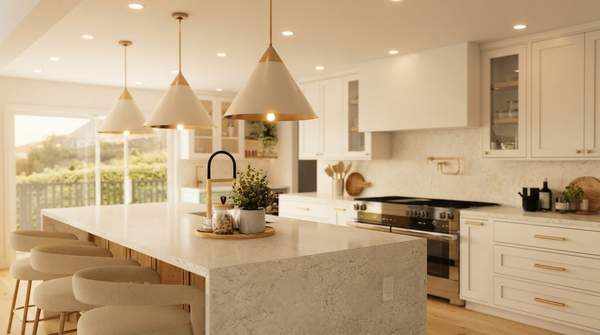
Choosing the right paint colors for your home can feel overwhelming, given the vast array of options. However, by adopting a systematic approach that considers your room's unique characteristics and your personal preferences, you can confidently select colors that achieve your desired aesthetic and mood, while ensuring a cohesive design throughout your home. This guide synthesizes expert advice from paint manufacturers and design professionals into a practical decision framework to help you navigate the process.
Start with Your Existing Elements: The Foundation of Your Palette
Before selecting paint colors, begin by analyzing the permanent features and existing decor within your room. These elements serve as the foundation for your color palette, helping to narrow down your options and ensure harmony. Benjamin Moore advises that colors in items like hardwood floors, countertops, fireplace surrounds, area rugs, and furniture will help determine which paint color families will work best in your room. Similarly, Sherwin-Williams suggests identifying permanent features such as cabinets, tile, or a brick fireplace and including them in your color selection process.
It is crucial to consider the undertones of these fixed elements. For instance, if your kitchen cabinets have a red undertone, ensure your chosen paint color complements that hue, rather than clashing with it. As design expert Emily Henderson emphasizes, "When putting together an outfit you don’t choose your cardigan independent of your shirt underneath, no, you make sure you like how they look next to each other because you see them at the same time." This principle applies directly to paint colors and existing decor, ensuring a cohesive look.
Beyond coordinating with existing colors, you can also use paint to highlight your home's architectural features. Sherwin-Williams suggests emphasizing elements like crown molding or arched window treatments with contrasting paint, either lighter or darker than the wall color. Alternatively, painting them the same color with a glossy finish can create a subtle, elegant emphasis. By carefully considering these existing elements, you establish a strong starting point for your paint color journey.