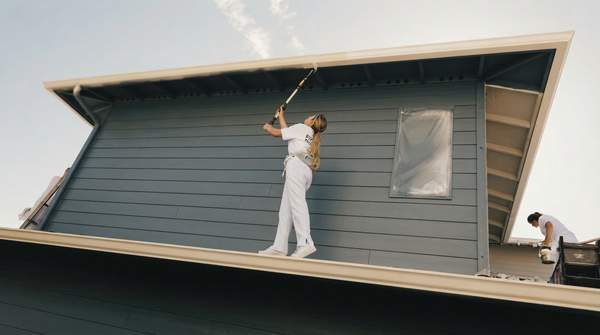
For most homes, the answer is a high-quality 100% acrylic latex paint in a satin or low-luster finish. Painting contractors and paint manufacturers consistently recommend it because it stays flexible through temperature swings, resists UV fading, handles humidity, and cleans up with water. Oil-based paint still has a place — but mainly on trim, doors, and railings, not broad siding surfaces. The right choice for your house comes down to three questions: what is your siding made of, what does your climate throw at it, and how well will you prep the surface?
Understanding Exterior Paint Types: Acrylic Latex vs. Oil-Based
The core difference is how each paint behaves when the surface beneath it moves. Acrylic latex paints expand and contract with temperature fluctuations, which prevents the cracking and peeling that destroys a paint job from the inside out. HIS Paint Manufacturing Company, which formulates exterior coatings for harsh climates, describes water-based acrylics as durable and flexible — ideal for areas prone to temperature swings because they move with the substrate instead of cracking.
Oil-based (alkyd) paints take the opposite approach: they cure into a hard, protective shell. Brackens Painting notes their strong moisture resistance, excellent adhesion and leveling, and rich finish with fewer coats — but also their high VOC content, mineral-spirits cleanup, and 24-to-48-hour dry time. The hard shell that makes them attractive on doors and railings becomes a liability on large siding surfaces, where the coating cannot flex with the wood or fiber cement underneath.
Consumer Reports' testing-based guidance adds a long-term caveat: oil-based paints don't expand and contract the way latex and acrylic paints do, and they can eventually crack under UV exposure, yellow, and lose luster over time. Z&Z Painting, a Chicago contractor writing about cold climates, puts it bluntly: oil-based paints get brittle in cold, "which is the exact opposite of what you want," and modern 100% acrylic latex topcoats outperform alkyd ones on most substrates. Hybrid alkyd paints split the difference, pairing oil-like durability with latex-like flexibility — a premium-priced option best suited to trim, doors, and high-wear surfaces.