The U.S. Department of Energy estimates proper home insulation can cut heating and cooling costs by up to 30%, a direct path to substantial utility bill savings and enhanced comfort. While higher R-values promise better thermal performance, improper installation or material compression often undermines effectiveness. Homeowners who grasp and correctly apply R-value principles will likely see significant, long-term savings and improved home comfort.
What is R-Value and Why it's Your Home's Thermal Shield
R-value quantifies insulation's thermal resistance, measuring its ability to impede heat flow. Energy Star confirms a higher R-value means better thermal performance. This directly impacts your home’s ability to maintain stable indoor temperatures.
Understanding R-value is crucial for managing energy consumption. A well-insulated home reduces heat transfer, easing the burden on heating and cooling systems. This knowledge helps you make smart choices for your home's thermal envelope.
Comparing Insulation Materials: A Spectrum of R-Values
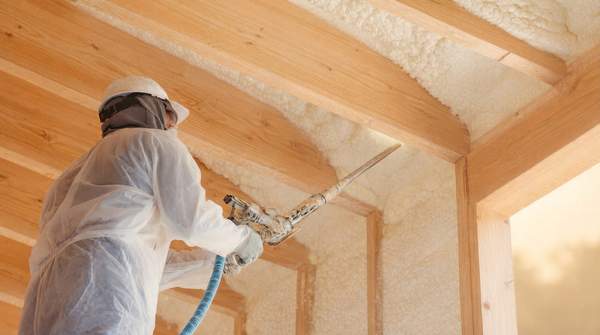
Insulation materials vary widely in R-value per inch, directly affecting a space's thermal resistance. Spray Foam Insulation leads with R-6.0 to R-6.5 per inch, according to leyton, making it effective even in thin applications. Rigid Foam Boards (Polyiso, XPS) perform similarly, offering R-5.0 to R-6.5 per inch, also per leyton. Stone Wool (Rockwool) provides R-4.0 per inch, while Fiberglass Insulation typically ranges from R-3.0 to R-4.3 per inch, according to leyton. Material selection hinges on the specific application and available space.
Tailoring R-Values to Your Climate and Home Zones
Optimal R-value depends heavily on climate and specific home zones. Climate zone 5, for example, needs R-30 to R-33, according to carlislesyntec. This shows insulation strategies must be localized.
Attic R-values vary by climate: R30-R49 in warm zones, R38-R60 in moderate, and R49-R60+ in cold, reports USA Insulation. Exterior walls also have specific needs: R13-R15 for 2x4 walls and R19-R21 for 2x6 walls, per USA Insulation. These diverse recommendations prove a universal 'most cost-effective' claim lacks context.